



Qantas Business Class sits in a competitive tier of long-haul premium travel, and after flying it multiple times across different aircraft and routes, I can say the experience varies more than most airlines admit in their marketing. On a Sydney to London sector a couple of years back, I booked what I thought was a standard Business Class seat and ended up on an A330 configuration I hadn't anticipated. The seat you get on a Boeing 787 Dreamliner bears little resemblance to what you'll find on an older A330, and knowing the difference before you book can save you from a disappointing flight.
The sections below cover seat configurations, cabin differences by aircraft, food and service quality, lounge access, and whether the price or points cost makes sense for your situation.
The most important thing to understand is that Qantas doesn't operate a single Business Class product. The seat you get depends entirely on which aircraft is flying your route.
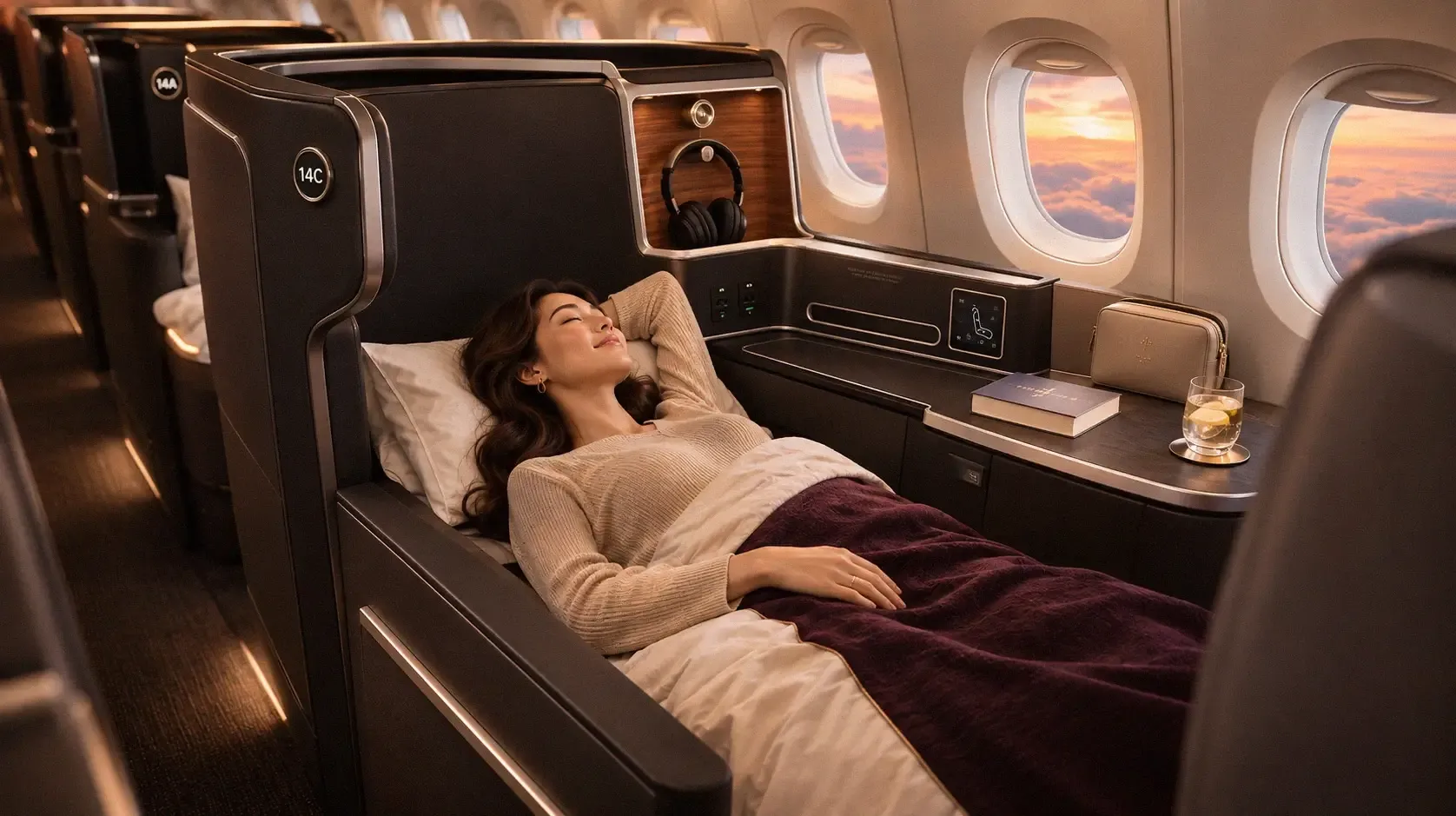
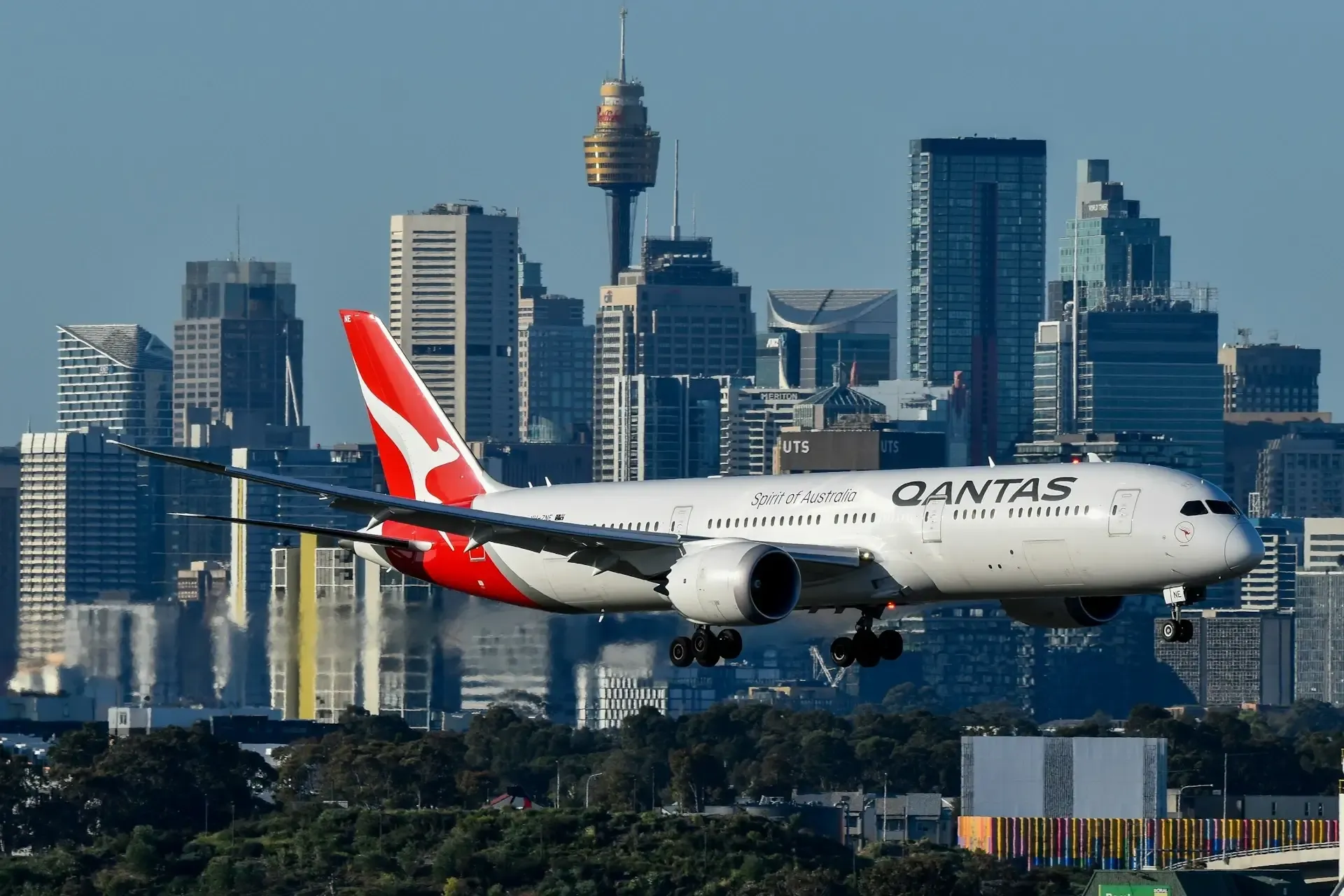
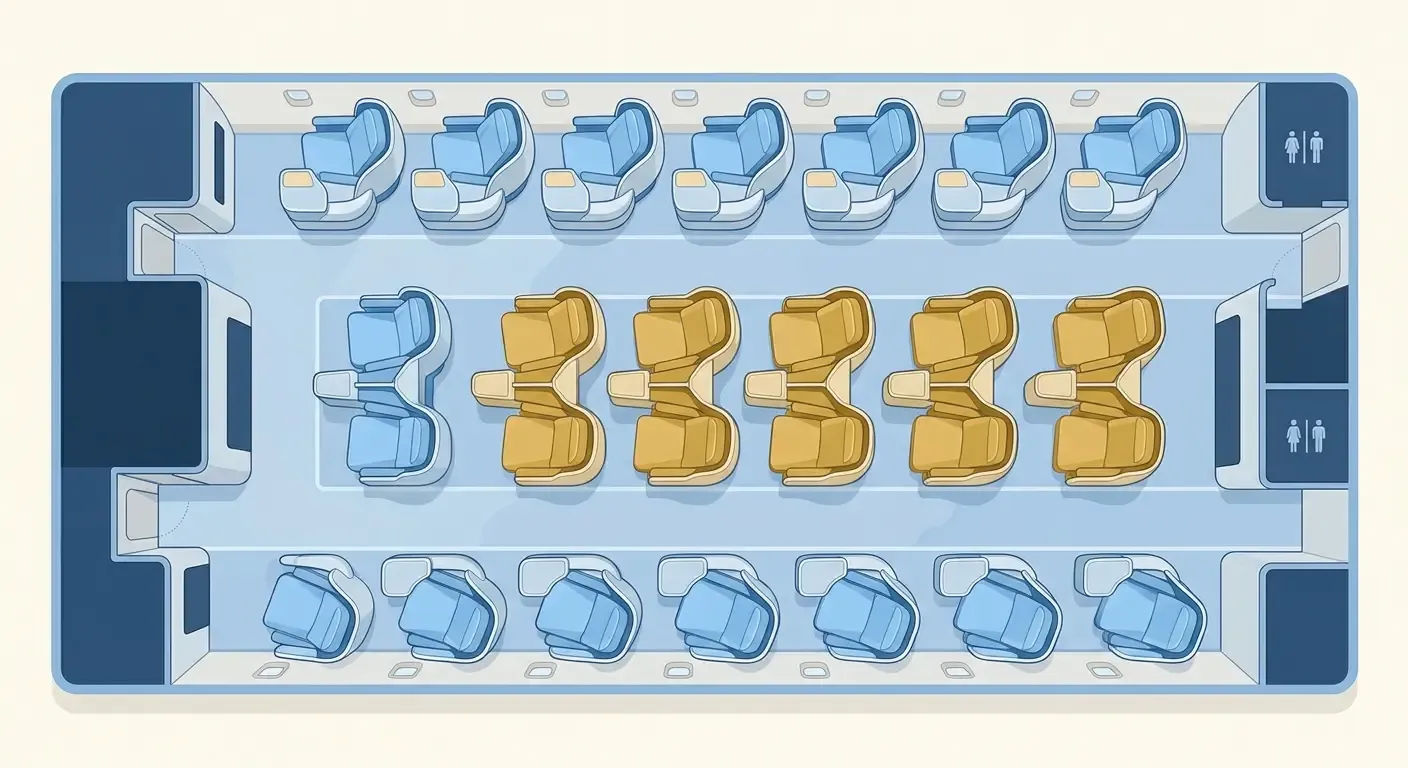
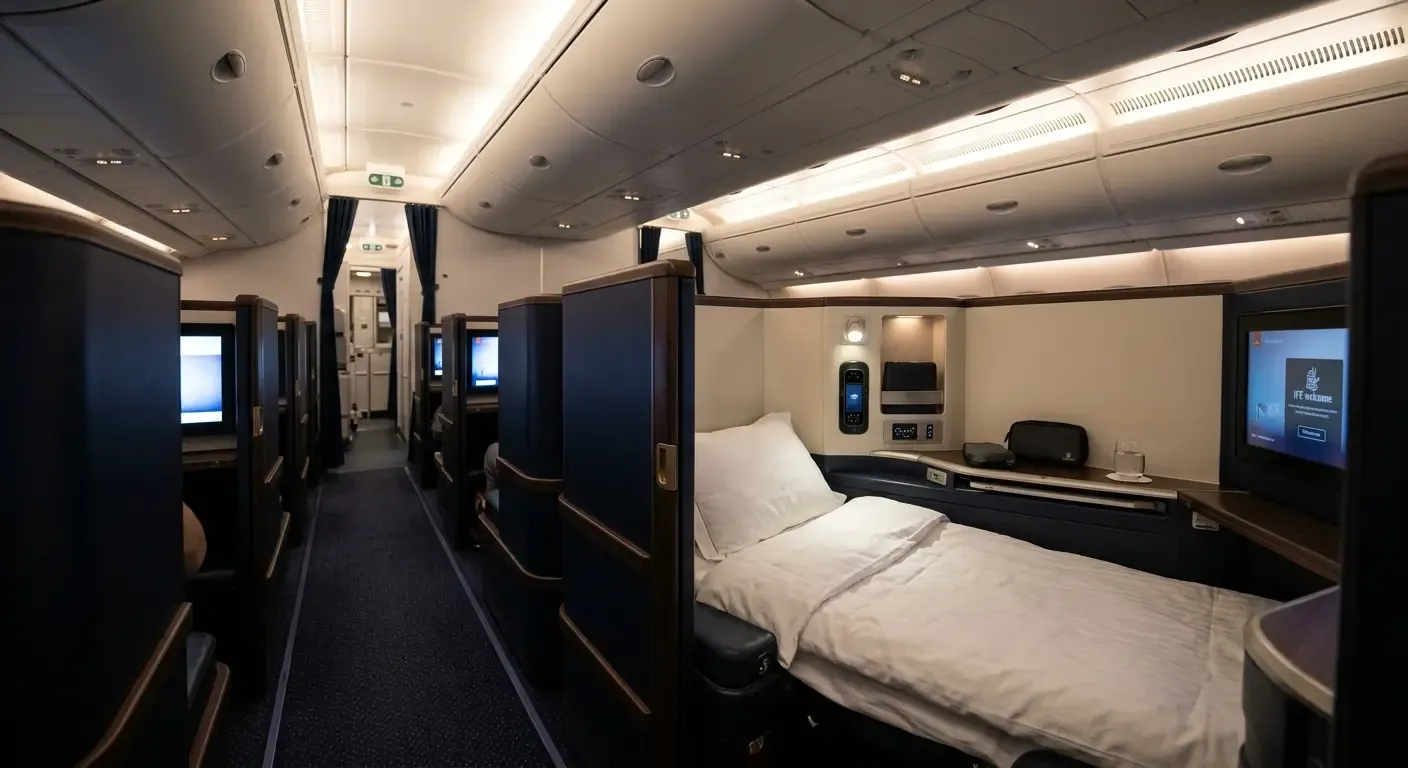
This is the best Business Class seat Qantas currently flies. The 787 features a 1-2-1 configuration, meaning every passenger has direct aisle access without climbing over anyone. The seat converts to a fully lie-flat bed measuring 6 feet 5 inches (196 cm), which is comfortable for adults up to that height without much compromise.
The seat design uses a herringbone layout, angled slightly toward the window on the sides and facing forward in the center pair. Window seats offer more privacy; center seats work better for couples traveling together. Storage is reasonable, with a side cubby for a water bottle, shoes, and personal items.
The 18.5-inch entertainment screen is large and responsive. Noise-canceling headphones are provided, and the Bluetooth audio pairing works reliably, which isn't guaranteed on every airline.
Qantas operates the A380 on its highest-volume long-haul routes, including Sydney to London via Singapore and Sydney to Los Angeles. Business Class sits on the upper deck in a 1-2-1 configuration, similar in concept to the 787 but with slightly different seat geometry.
The A380 Business Suite feels more enclosed than the 787 seat, with a higher privacy shell. Bed length is comparable at around 6 feet 5 inches. One advantage worth noting: the upper deck cabin is quieter than a main-deck Business cabin, and the windows are slightly larger.
Entertainment screens on the A380 run at 15.4 inches, smaller than the 787, but the content library is extensive. Qantas has retrofitted most of its A380 fleet with updated interiors, so the product feels current rather than dated.
Here's where things get more complicated. The A330 flies many of Qantas's medium-haul international routes, including trans-Tasman and some Southeast Asia services. Business Class on the A330 uses a 2-2-2 layout, which means aisle access requires stepping over your neighbor unless you're in an aisle seat.
The seats still recline to fully flat, but the product feels noticeably older. Screen sizes are smaller, the seat padding is less generous, and the overall finish doesn't match what you'd find on the 787 or A380. If you're booking a trans-Tasman flight, the shorter duration makes this less of an issue, but on a six-hour sector, the older product becomes more noticeable.
Key Takeaways
Seat selection across the main aircraft types works differently depending on what you prioritize. Not all seats in the same cabin are equal.
| Aircraft | Best Seats | Avoid | Why |
|---|---|---|---|
| 787-9 | Window seats (A/K rows) | Center forward-facing | Privacy, storage cubby |
| A380 | Upper deck window | Row 62 (near galley) | Quiet, enclosed feel |
| A330 | Aisle seats (C/D) | Middle seats (D in 2-2-2) | Avoid climbing over neighbor |
On the 787, seats in the bulkhead row offer more legroom but less under-seat storage. Tall passengers will find that trade-off worthwhile. If you travel with carry-on gear you want accessible during the flight, pick a non-bulkhead row instead.
For the A380, rows near the front of the upper deck Business cabin tend to be quieter and board faster. The last two rows near the rear galley can pick up noise during meal service, particularly on the Sydney to Los Angeles sector where the crew runs multiple service rounds across a 15-hour flight.
On the A330, the aisle seats in the center section (D seats) are worth avoiding entirely. You'll have a neighbor on both sides, no window, and limited personal space. The window aisle seats in the 2-2-2 layout (C and D on the outer pairs) are the best available option on this aircraft.
Qantas has invested seriously in its catering over the past several years, and the Business Class meal experience on long-haul flights reflects that. The airline partnered with Neil Perry for over two decades before transitioning in 2021 to a rotating roster of Australian chefs. Perry's influence shaped the program's emphasis on seasonal Australian produce and restaurant-style plating, and that philosophy has carried through to the current lineup. The menu changes every few months and typically features three or four chefs contributing dishes across different routes.
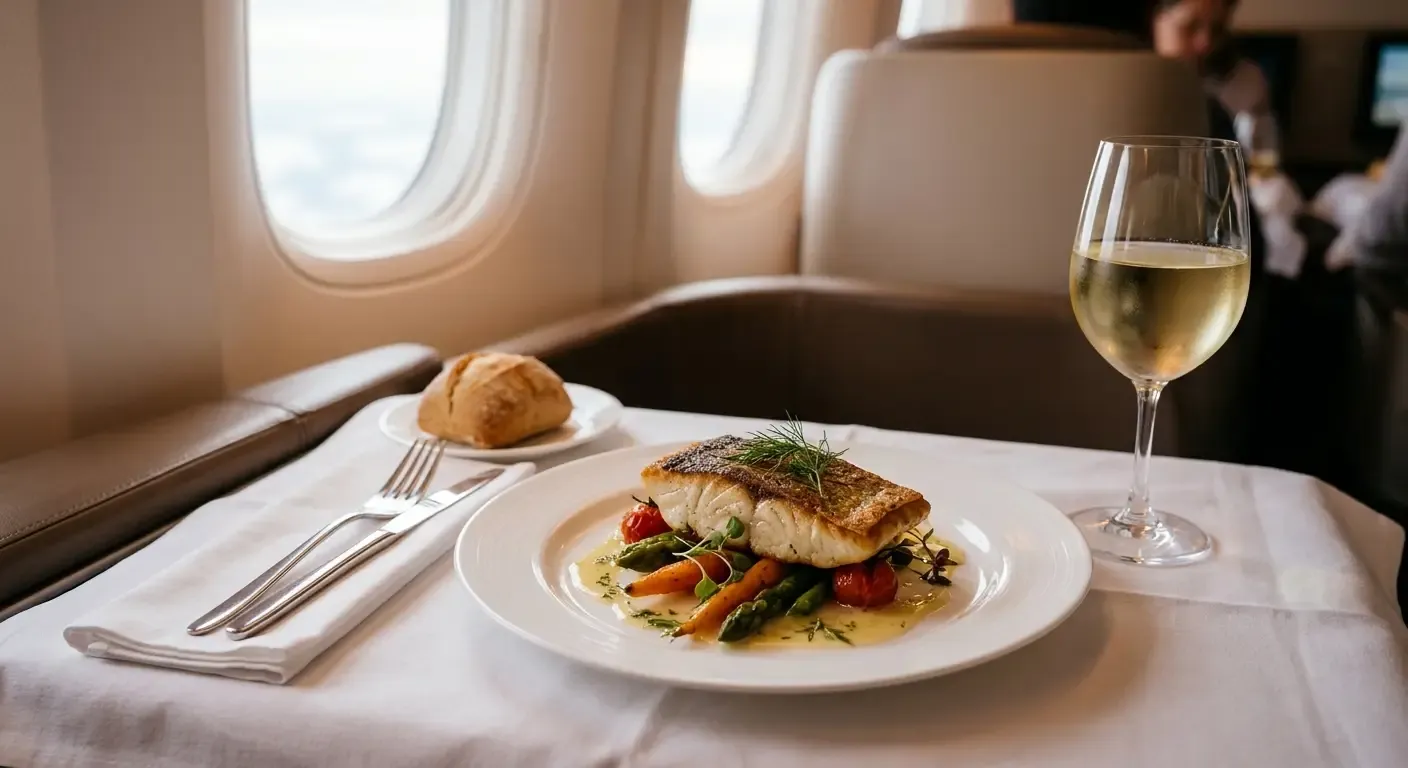
On a typical Sydney to London leg, dinner service starts shortly after departure. You'll receive a proper menu card with three or four main course options, an entree, cheese course, and dessert. The portions are restaurant-sized rather than airline-sized. Some airlines claim this and don't deliver; Qantas mostly does.
The wine list is strong. Qantas serves Australian labels almost exclusively in Business, which works in your favor: you're getting wines selected specifically for the program rather than generic international labels bought in bulk. A Penfolds Bin 389 at 35,000 feet is a reasonable way to spend a few hours.
Breakfast before landing is lighter, typically a choice between something egg-based and a continental option. The quality holds up, though by hour fourteen of a long-haul flight, most passengers are just grateful for fresh fruit and good coffee.
Tip: Dine on Demand. On flights over 8 hours, Qantas offers a dine-on-demand option where you can eat when you want rather than following the crew's service schedule. Request this at the start of the flight if you'd rather sleep first and eat later. Not all crew proactively mention it.
Qantas cabin crew are professional and well-trained. The service style leans toward efficient rather than personalized, and the warmth doesn't match what you'd find on Singapore Airlines or Cathay Pacific. On most flights, crew will learn your name and use it. The interaction rarely goes much further than that.
What Qantas does deliver is consistency across a very long sector. Flying 14 hours from Sydney to Dallas, you won't encounter the wide variance in service quality that some carriers produce when crew are having an off night. Steady, reliable service throughout a long-haul sector has real value, even if it doesn't make for interesting stories afterward.
One area where the service stands out: the bedding setup. Qantas provides a proper mattress topper, a full-size duvet, and a decent pillow. When crew make up your bed, it's done properly, with the topper laid flat and the duvet folded back. The pajamas provided on long-haul flights (typically routes over 7 hours) are comfortable and made from a breathable cotton blend. They're yours to keep.
The amenity kit quality varies by route but typically features products from Australian skincare labels. On the Sydney to London route, the kit has historically included Peter Thomas Roth or Grown Alchemist products, though Qantas rotates these periodically.
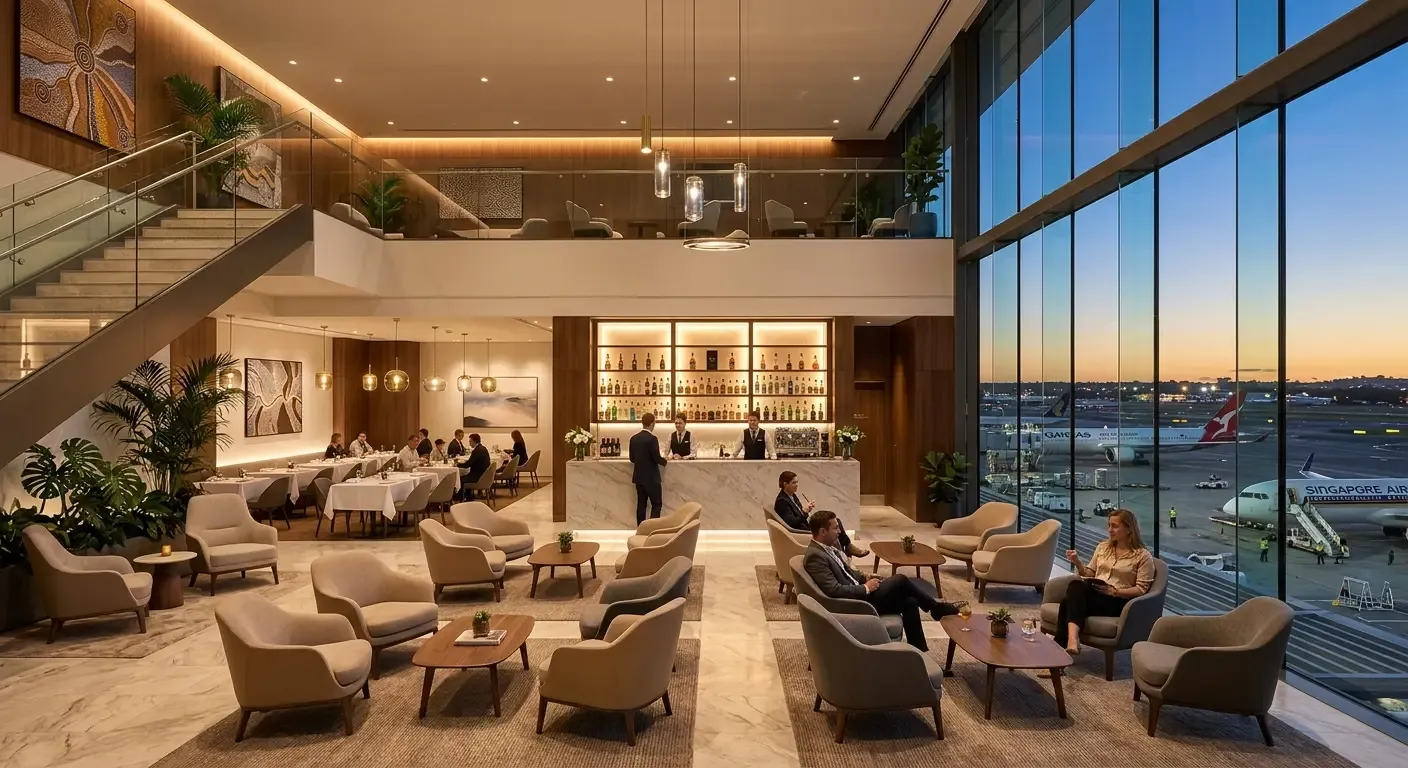
Business Class passengers get access to the Qantas International Business Lounge at major Australian airports. Sydney's International Business Lounge is the standard to measure others against, and it's impressive by any reasonable comparison.
Spread across two levels, it offers a la carte dining (not just buffet), a full bar, shower suites, and a dedicated relaxation area. If you're transiting through Sydney with a few hours to spare, the lounge alone justifies a significant portion of the Business Class fare. The a la carte menu runs to proper mains, not just snacks, and the wine and spirits selection is extensive.
Melbourne and Brisbane International Business Lounges are smaller but follow a similar format. Dining shifts to buffet-style rather than a la carte, and the overall footprint is more compact. Both are still well above average for airport lounges, with comfortable seating and a reasonable food spread.
One important note worth correcting upfront: Qantas First Class passengers access a separate, more exclusive lounge in Sydney. If you've seen photos of the Qantas First Lounge and assumed that's what Business Class passengers access, that's a common misconception. The Business Lounge is excellent, but it's a different product with a different level of exclusivity.
For passengers connecting through partner airports, oneworld alliance membership means access to partner lounges at airports where Qantas doesn't operate its own facility. On a Sydney to London itinerary with a Singapore stopover, for example, Business Class passengers can use Singapore Airlines' SilverKris lounge at Changi. The quality of these partner lounges varies significantly, but the access itself is a meaningful benefit that extends the lounge experience well beyond Australian airports.
Qantas Business Class cash fares are expensive. Sydney to London in Business runs anywhere from AUD 8,000 to AUD 15,000 depending on season and booking window (fares checked across 2024 departure dates). The points route is often significantly better value, provided you can find award availability.
| Route | Points Required (Classic Award) | Taxes and Fees |
|---|---|---|
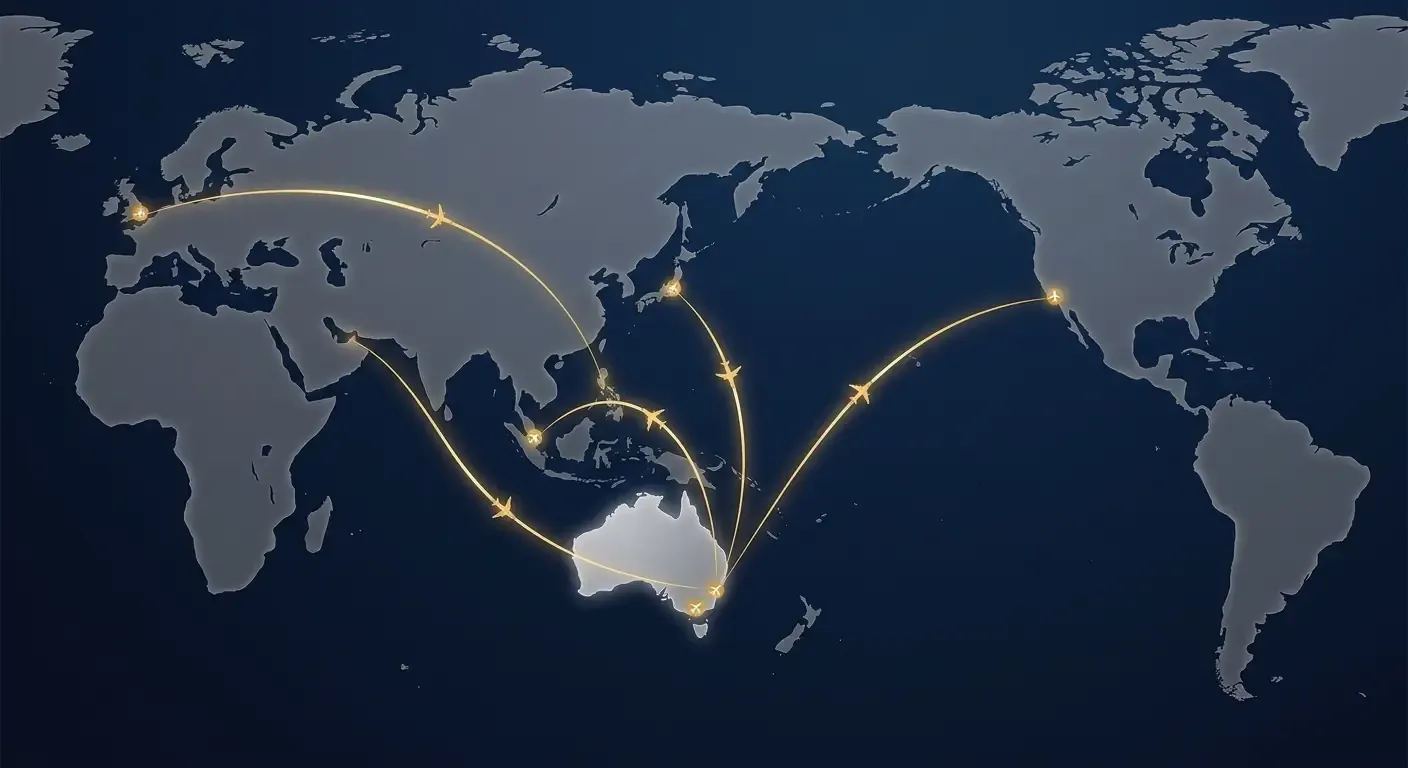
| Sydney to Los Angeles | 108,400 pts (one-way) | AUD 250 to 400 |
| Sydney to London | 144,800 pts (one-way) | AUD 350 to 600 |
| Sydney to Singapore | 54,200 pts (one-way) | AUD 150 to 250 |
| Melbourne to Tokyo | 54,200 pts (one-way) | AUD 150 to 250 |
These are Classic Award rates as published by Qantas for 2026/2027. Classic Awards offer the best points-per-dollar value and are the primary target for most frequent flyers redeeming for Business Class.
The fastest ways to accumulate Qantas Points without flying:
This is the hardest part. Qantas releases Classic Award seats on its own metal, but availability is limited and often appears only within a few weeks of departure or very early in the booking window (around 330 days out, though Qantas treats this as approximate rather than a hard rule). The sweet spot for long-haul routes is booking as soon as the schedule opens.
For partner award redemptions (booking a oneworld partner airline using Qantas Points), availability can be even tighter. British Airways in Business on the London to New York sector shows up occasionally but requires persistent searching. American Airlines transatlantic availability tends to be more consistent.
Award Booking Tip. Set up an alert through ExpertFlyer for your preferred route. ExpertFlyer monitors seat availability across multiple airlines and sends an email when a seat class opens up. Points.me performs a similar function, scanning award space across loyalty programs simultaneously. Both tools save hours of manual searching when availability opens unpredictably.
So what does AUD 10,000 actually buy you on a 24-hour journey to London?
The cash fare question is difficult to answer without knowing your specific situation. At AUD 10,000 for a Sydney to London return, you're paying roughly AUD 350 per hour of flight time. Whether that's reasonable depends entirely on what the alternative costs you in productivity, sleep debt, and physical recovery on arrival.
Here's a more practical frame. If you're flying for work and arriving in London needing to be functional the same day, Business Class pays for itself in avoided lost productivity. If you're flying for a holiday and have flexibility around arrival, Premium Economy on the same route costs roughly half the price and delivers a reasonable experience. It doesn't convert to a flat bed, and on a 22-hour itinerary, that gap matters more than the price difference suggests.
The points redemption picture is different. At 144,800 points for a one-way Sydney to London Business Class seat, you're redeeming points at roughly 5.5 cents per point against the cash fare. That's strong value by any standard measure, and it's the primary reason frequent flyers prioritize Qantas Points accumulation over other programs.
What Qantas Business Class does well: the seat on the 787 and A380, the lounge product in Sydney, the catering, and the overall reliability of the operation. Where it falls short of competitors: the service warmth doesn't match Singapore Airlines or Cathay Pacific, and the A330 product is showing its age on routes where you'd encounter it.
On a 787 or A380, Qantas Business Class is a top-tier long-haul product. On an A330, it's good but not exceptional. Book accordingly, and always check the aircraft type before confirming.
FAQ
Yes, fully lie-flat beds are standard across the Qantas Business Class fleet, covering the 787-9, A380, and A330. All three aircraft types offer a bed length of approximately 6 feet 5 inches. The key difference is layout: the 787 and A380 give every passenger direct aisle access in a 1-2-1 configuration, while the A330 uses a 2-2-2 arrangement where aisle access depends on your seat position.
Blog