



The moment I realized business class was within reach wasn't in an airport lounge. It was sitting at my laptop, watching a transatlantic fare drop from $4,200 to $900 because I'd booked at the right time. That single insight changed how I think about premium travel permanently.
Full-fare business class tickets retail for $4,000–$8,000 on transatlantic routes. I've booked those same flights for under $1,200 cash, or 60,000 points. The gap between retail pricing and what you actually need to pay is enormous, and most travelers never discover it because they assume business class is off-limits.
Not every strategy works for every trip. Award availability fluctuates. Error fares disappear in hours. That said, using the right flight search engine at the right time consistently unlocks prices that would shock most economy travelers. The sections below give you concrete route data, a breakdown of what business class actually delivers, and a real savings case study.
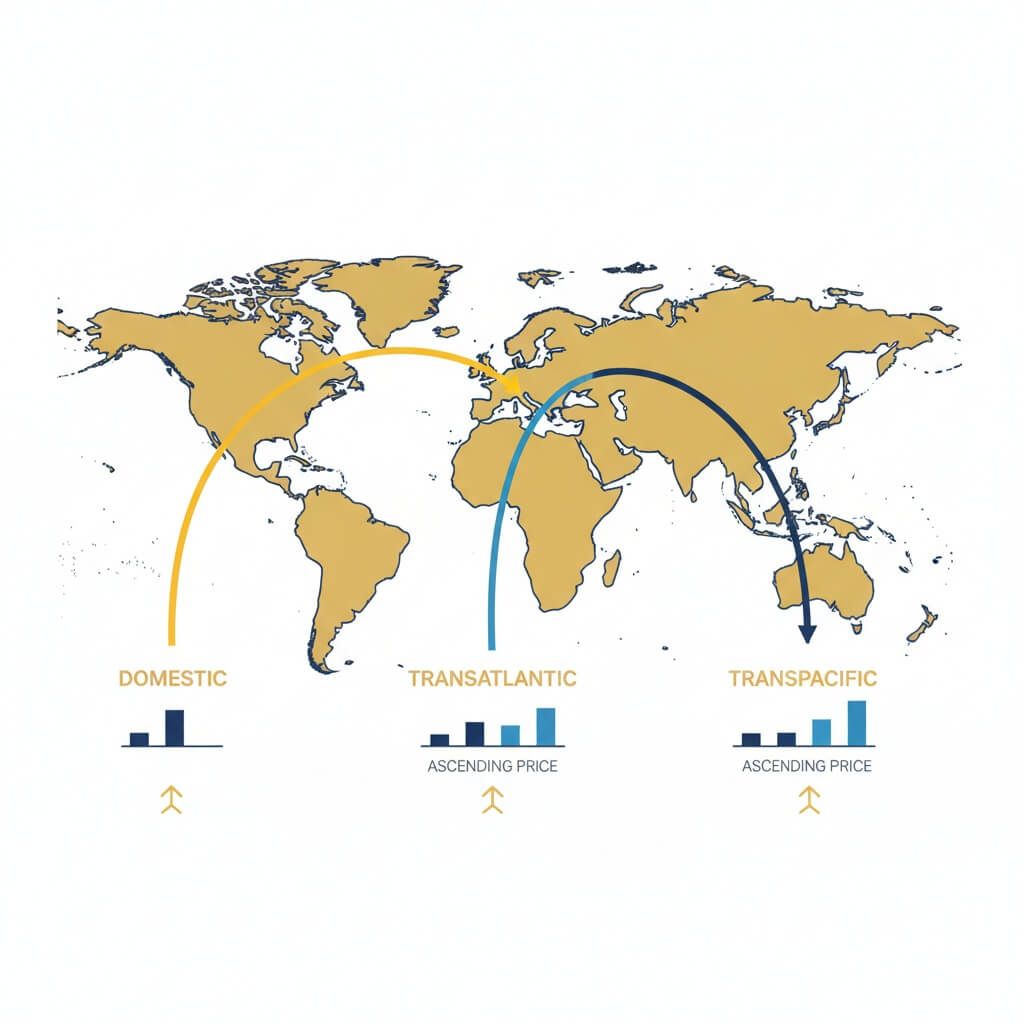




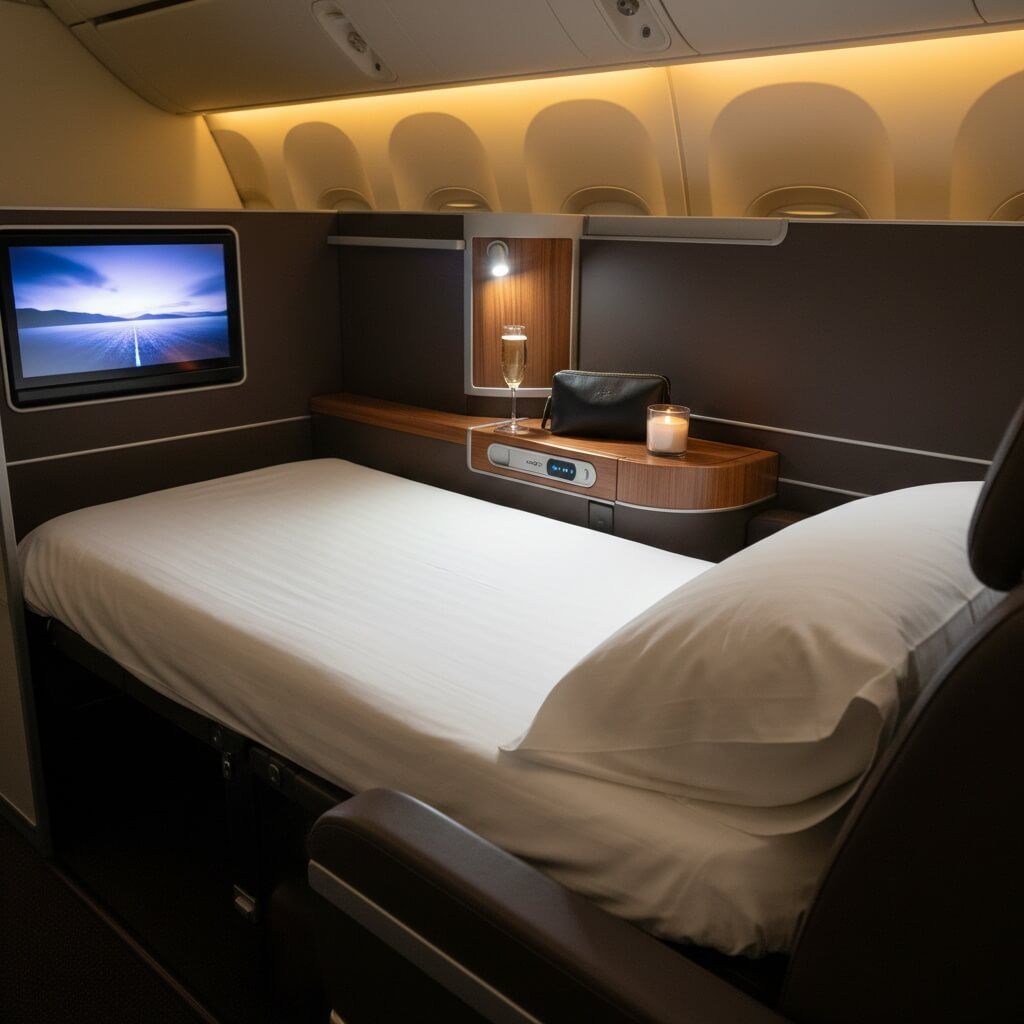

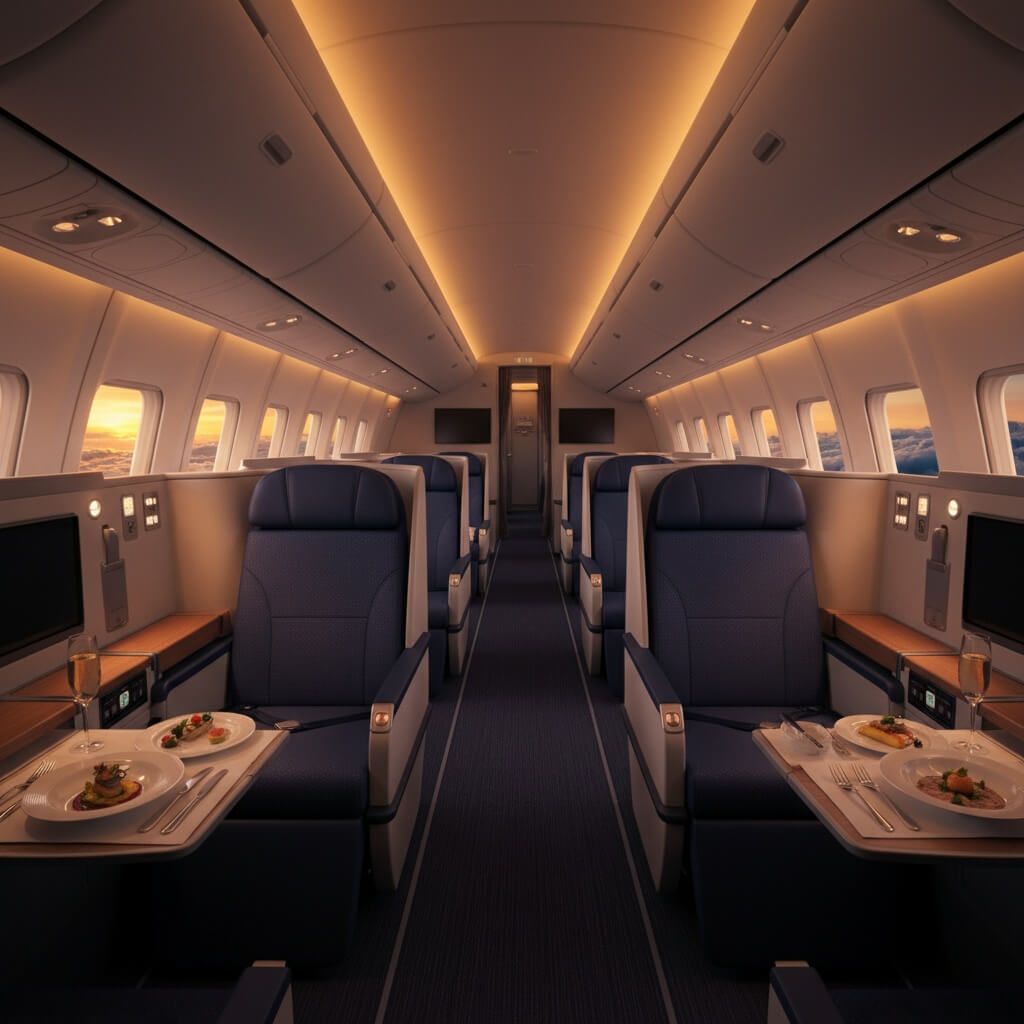

Business class fares aren't a single number. They're a spectrum, and where you land depends almost entirely on route, season, and how you book.
Route Category | Full Retail (One-Way) | Discounted Cash | Award Redemption |
|---|---|---|---|
Domestic US (e.g., Chicago–LA) | $500–$800 | $300–$500 | 15,000–25,000 miles |
Transatlantic (e.g., New York–London) | $4,000–$8,000 | $1,200–$2,500 | 50,000–70,000 miles |
Transpacific (e.g., LA–Tokyo) | $5,000–$9,000 | $1,900–$2,600 | 60,000–90,000 miles |
The American Express Global Business Travel Air Monitor 2025 forecasts transatlantic business class averaging $2,500–$3,200, down roughly 10% from 2023–2024 peaks. Asian routes like Tokyo–Singapore run $1,900–$2,600 under normal conditions. Domestic US and European business class can fall to $800–$1,400 with early booking or sale fares.
Three distinct "cheap" categories exist, and they're not interchangeable:
Discounted cash fares — Published fares during sales, low-season windows, or promotional pricing. January is the strongest low-season anchor for transatlantic and transpacific routes.
Award redemptions — Miles redeemed through airline loyalty programs, often delivering the highest percentage savings on premium cabins.
Error fares — Pricing mistakes that last hours and can slash fares by 70–90%. Rare, but real.
Business Tickets benchmarks a good deal for US-to-worldwide round-trip business class at $1,608 or less, with a one-way threshold of $931 or less. Use those figures as your baseline before evaluating any fare you see.
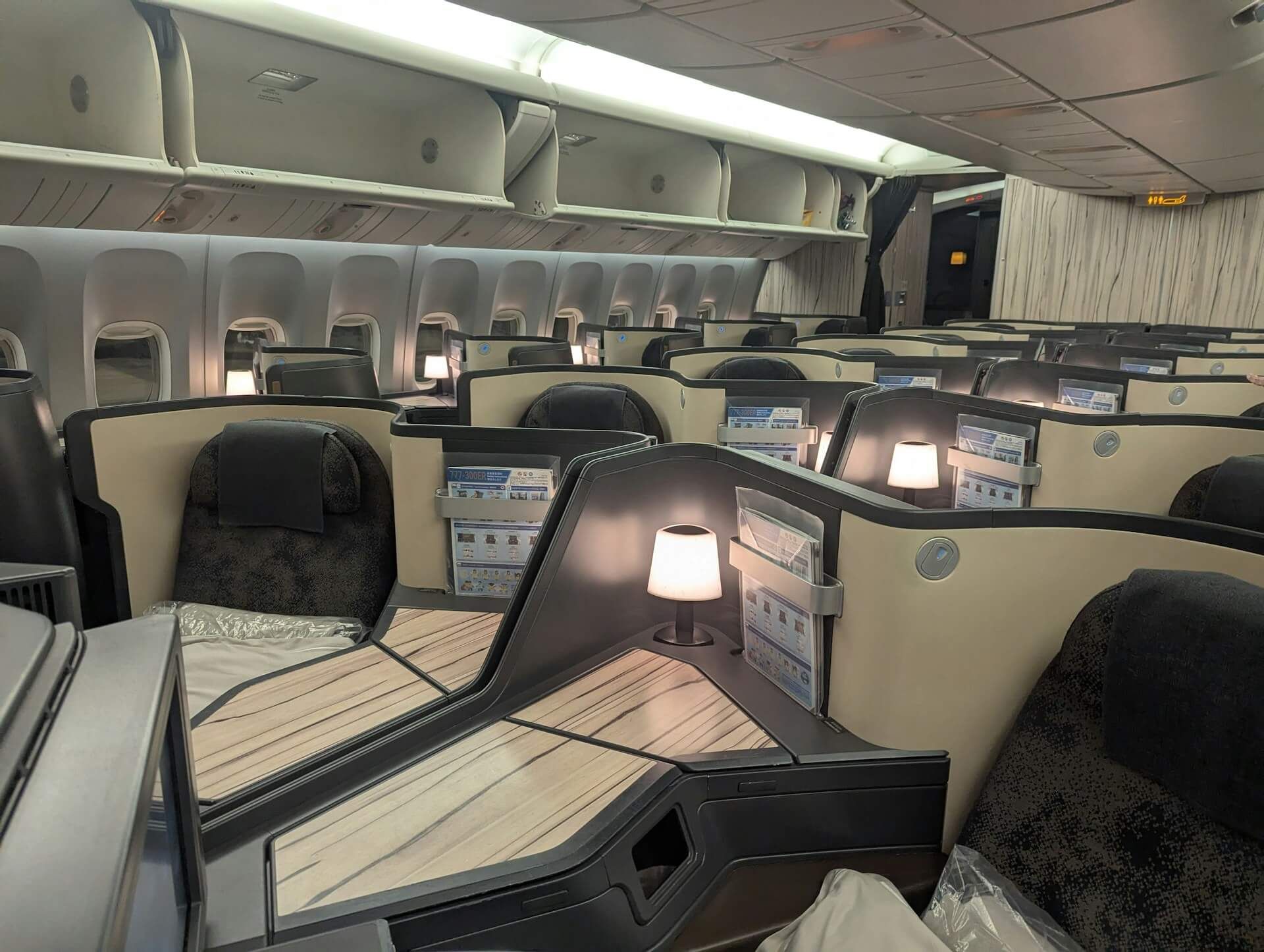
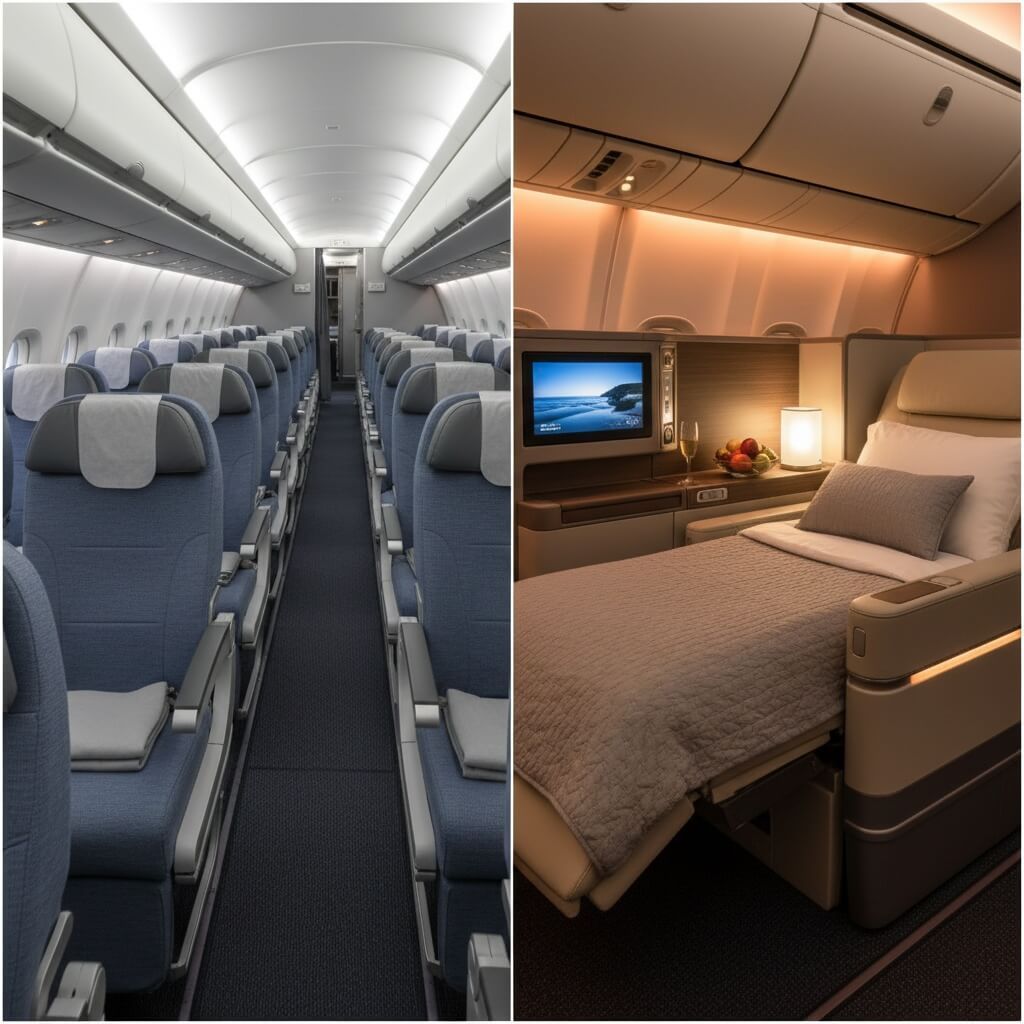
The first time I sat in a lie-flat business class seat on a transatlantic flight, I understood immediately why people prioritize finding these deals. It's not just comfort. It's the difference between arriving exhausted and arriving ready.
Seating — Economy seats pitch at 30–34 inches. Business class offers 60-plus inches of pitch with lie-flat beds on long-haul routes and seat widths of 20–24 inches, often in private pod configurations.
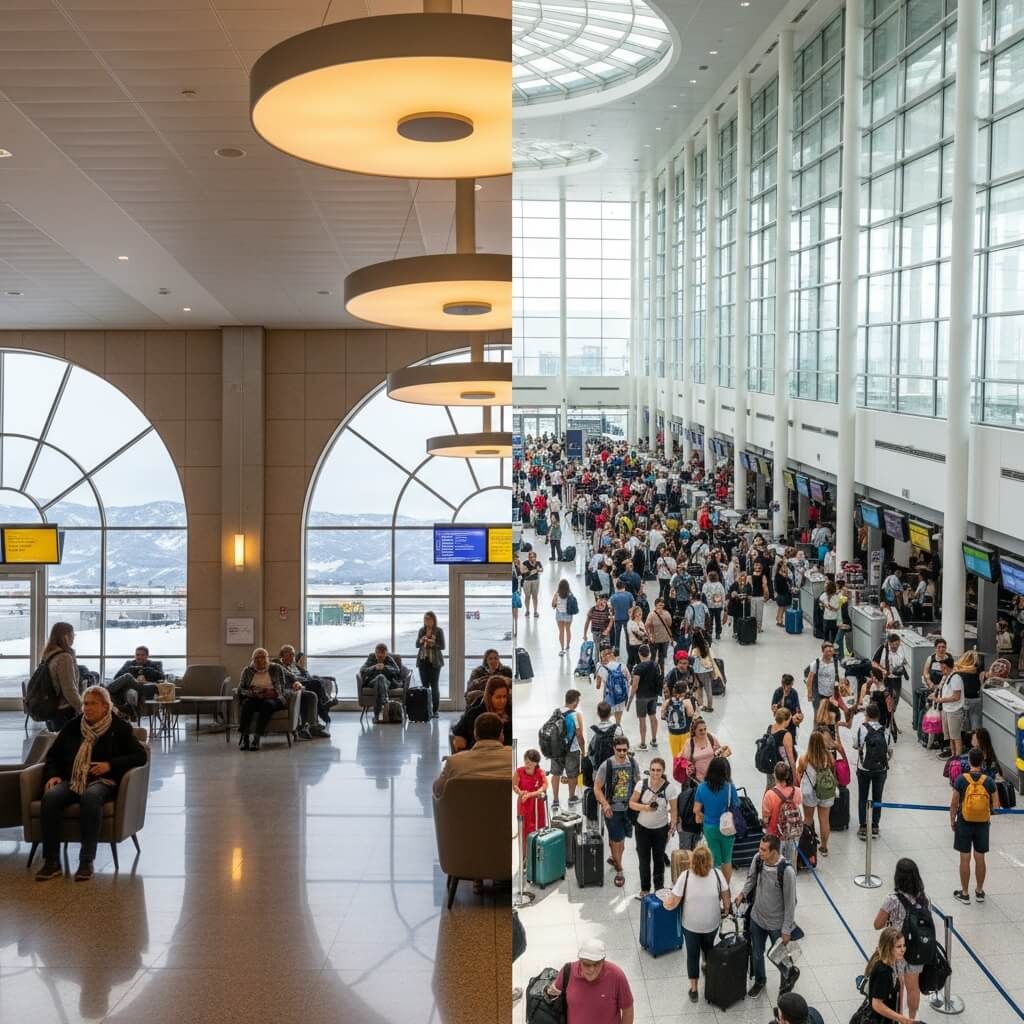
Airport lounge access — This is the differentiator most travelers underestimate. Carriers like Lufthansa (Senator Lounge) and American Airlines (Admirals Club) offer showers, full dining, workspaces, and premium bar service before your flight even begins.
Dining — Restaurant-quality multi-course meals with personalized menus, complimentary premium alcohol, and continuous beverage service.
Entertainment and amenities — High-definition personal screens (15–18 inches), noise-canceling headphones, plush pillows, and pajamas on most long-haul carriers.
Baggage and priority — Multiple checked bags, priority check-in, priority boarding, and priority baggage handling.
For any flight over six hours, the value of arriving rested is genuinely hard to overstate. First class exists and it's extraordinary, but the premium over business class (often 2–3 times the price or miles) almost never makes sense when applying the strategies in this article.
On my last transatlantic trip, I paid $900 instead of $4,200 by booking a discounted cash fare during January's low-season window. On a separate transpacific booking, I used 70,000 miles to access a seat retailing at $5,800. That's a cent-per-mile value of over 8 cents, roughly eight times what those miles would have been worth in economy.
Two mechanisms drove every significant saving I've achieved: airline loyalty program redemptions and flight consolidator pricing. Both are covered in detail below. These aren't exotic strategies. They're systematic approaches that reward preparation.
Points and miles are the single most effective tool in the premium traveler's toolkit. Nothing else comes close to the percentage savings they can generate on business class seats.
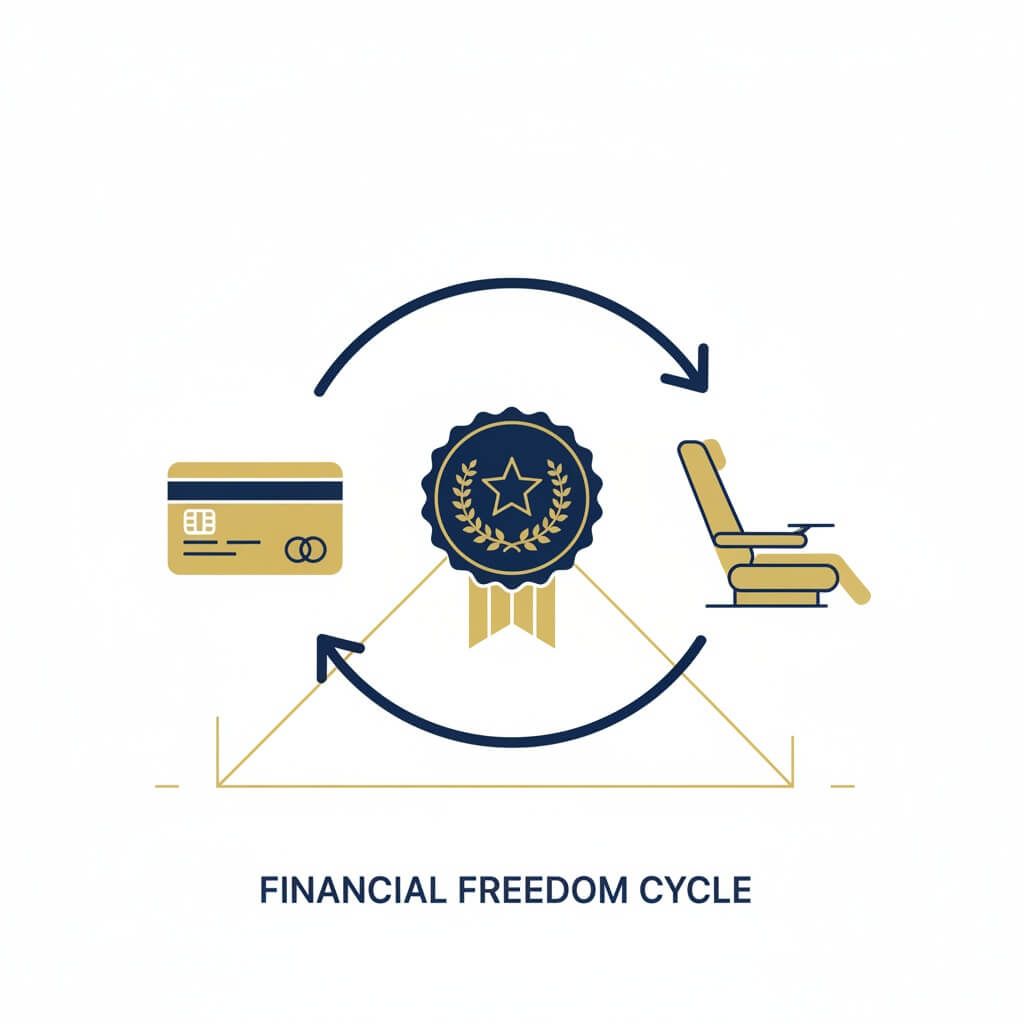
The mechanic is straightforward: earn transferable points through a travel rewards credit card, transfer those points to an airline loyalty program, then search and book award seats. That three-step pathway — earn, transfer, book — is the entire framework. Keep your points in transferable credit card currencies for as long as possible. Once transferred to an airline program, they can't come back.
My first business class award redemption was funded almost entirely by a single credit card sign-up bonus. That experience shaped how I approach point accumulation, and why I always recommend starting with a transferable points card rather than a co-branded airline card.
Chase Sapphire Reserve — Welcome bonus after minimum spend (verify current offer at Chase's offer page, as bonuses change frequently). Earns 4 points per $1 on flights and hotels booked directly, 3 points per $1 on dining. Transfers to roughly a dozen airline and hotel partners.
Chase Sapphire Preferred — Lower annual fee entry point for building Chase points, with a strong welcome bonus and $50 Chase Travel Hotel Credit.
American Express Platinum Card — Transfers to 21 loyalty programs including ANA, Singapore KrisFlyer, and Air France-KLM Flying Blue. Strong airport lounge access benefits.
American Express Gold Card — Accelerated earning on dining and groceries with the same Membership Rewards transfer flexibility.
Capital One Venture X — 10 times points on hotels and cars booked through Capital One Travel, 5 times on flights through Capital One Travel.
One practical note: Chase Ultimate Rewards points can be pooled across multiple Chase products. Pairing a Chase Sapphire Reserve with a Chase Freedom Flex or Freedom Unlimited lets you earn on everyday spending and convert those points into transferable currency.
Not all loyalty programs are created equal, and the difference between a mediocre program and a strong one can be tens of thousands of miles on the same flight.
Air France-KLM Flying Blue — Ranked the best airline rewards program in the world for 2025 by Point.me, for the second consecutive year. Strong availability on SkyTeam partners and low redemption costs.
Air Canada Aeroplan — Ranked 2nd worldwide by Point.me. Solid partner availability, generous routing rules, and access to Star Alliance business class seats.
American Airlines AAdvantage — Ranked 1st in North America by Point.me 2025. I use AAdvantage specifically to access Qatar Airways QSuites at 70,000 miles one-way.
Alaska Airlines Mileage Plan — Ranked 3rd worldwide by Point.me 2025. Unique partner relationships with Cathay Pacific and Japan Airlines create redemption opportunities other programs can't match.
Virgin Atlantic Flying Club — I use this program specifically to access Delta One business class at a fraction of what Delta's own program charges.
A warning most guides skip: fuel surcharges. Some programs, particularly British Airways Executive Club, pass carrier-imposed surcharges directly to the passenger. A "cheap" award can suddenly cost $600-plus in fees. Always calculate the all-in cost before transferring miles.
I always search 11 months out for the best award availability on popular routes. Most airlines load their award inventory when schedules open, roughly 330–360 days before departure. The best business class seats on routes like New York–London or Los Angeles–Tokyo disappear quickly.
Saver awards (the lowest available award tier) are the only redemptions worth pursuing. Standard or "anytime" awards can cost 2–3 times more miles for the identical seat. Always filter for saver-level availability only.
Seats.aero — Searches award space every few hours across multiple fare classes. The Pro version ($9.99/month) includes a Qatar QSuites Finder and access to Rooms.aero for hotel award searches.
AwardFares — Supports up to 24 airline loyalty programs with special tools for Delta One, Lufthansa First Class, and Qatar QSuites. Allows filtering by aircraft type.
ExpertFlyer — Real-time alerts for upgrade and award seat availability across dozens of airlines.
Point.me — Listed among the best award search tools. Use code ALLTHEHACKS20 for 20% off annual plans.
SeatSpy — Searches a full year of award availability in seconds on supported nonstop routes.
The core advantage these flight search engine tools have over airline websites: they search across multiple programs simultaneously and surface availability that individual airline portals often obscure.
Points aren't the only path. I've also booked strong cash-fare deals by having the right systems in place. Think of fare alert tools as an early-warning system that works while you sleep. The best prices vanish within hours, sometimes minutes.
I run alerts on three platforms at all times. That redundancy has caught deals the others missed, including a transatlantic business class fare that appeared and disappeared within four hours.
Google Flights — My starting point for every search. Real-time pricing, a month-view calendar for spotting low-fare windows, cabin class filters, and price alerts for business class fares. The visual price graph alone is worth using for every search.
Business Tickets — The "Good to Know" fare benchmarks are the most useful baseline-setting tool available. Before I evaluate any deal, I check Business Tickets benchmark for that route to distinguish genuine savings from marketing noise.
Skyscanner — Price Alerts automatically track saved flights and notify via email when fares change.
Airfarewatchdog — Enables alerts across Economy, Premium Economy, Business, and First Class. The Premium membership ($79/year) adds international business class filters.
ExpertFlyer — Real-time alerts for award and upgrade availability, not just cash fares.
Seats.aero — Instant search for award flights sortable by business or first class, with free alerts on award availability changes.
My personal configuration: Google Flights for daily monitoring, Business Tickets for benchmarking before any purchase decision, and Airfarewatchdog Premium for international business class deal alerts. Airline newsletter subscriptions round out the system.
Not every "sale" is a sale. Before assessing any deal, I check Business Tickets benchmark for that specific route. For US-to-worldwide business class, a good round-trip deal comes in at $1,608 or less, and a good one-way at $931 or less.
Seasonal context matters enormously. A $2,000 transatlantic business class fare in January is not the same deal as the same price in October, when demand peaks. You need route-specific baselines by month, not just by route.
Error fares deserve their own protocol. The best deal I ever booked was a $650 transatlantic business class error fare, a pricing mistake caused by a currency conversion error that lasted approximately three hours. Here's how error fares work:
They occur due to human pricing errors: omitted digits, wrong fare class assignments, or system glitches.
Speed is everything. Most last only a few hours before airlines correct the price.
Airlines honor mistake fares the majority of the time, especially when large volumes of bookings occur, since mass cancellations create significant PR damage. In some cases, airlines cancel and issue full refunds instead.
Real examples of honored error fares include $282 round-trip New York to Barcelona and a January 2026 error fare offering business class from Spanish cities to Mexico City for €496 one-way via Air Europa and Aeromexico.
My protocol when an error fare appears: book directly with the airline for the 24-hour cancellation window, avoid non-refundable hotel or connection bookings until the ticket is confirmed, and use a travel rewards credit card for chargeback protection if the fare is canceled. Services like Going (formerly Scott's Cheap Flights), Thrifty Traveler Premium, and Secret Flying alert on mistake fares including business class deals.
I always think about timing before anything else when planning a premium trip. The same seat on the same flight can cost $900 or $4,200 depending on when you search, when you book, and when you fly.
Route type determines the optimal advance purchase window, and getting this wrong costs real money.
Transatlantic (e.g., New York–London, Miami–Paris) — The 4–6 month mark is the consistent sweet spot for cash fares. Earlier than 8 months, promotional fares often haven't been released yet. Later than 3 months, demand-driven pricing starts pushing fares up significantly.
Transpacific (e.g., Los Angeles–Tokyo, San Francisco–Singapore) — 4–8 months in advance. These routes have less promotional fare frequency, so booking early matters more.
Domestic US (e.g., New York–Los Angeles, Chicago–Miami) — 4–6 weeks is typically sufficient. Domestic business class fares don't follow the same long-lead pattern as international routes.
For award bookings, the window shifts dramatically. Airlines typically load schedules 330–360 days before departure, and the best business class award seats are often claimed within days of release. Search 11 months out for any award booking on a popular route.
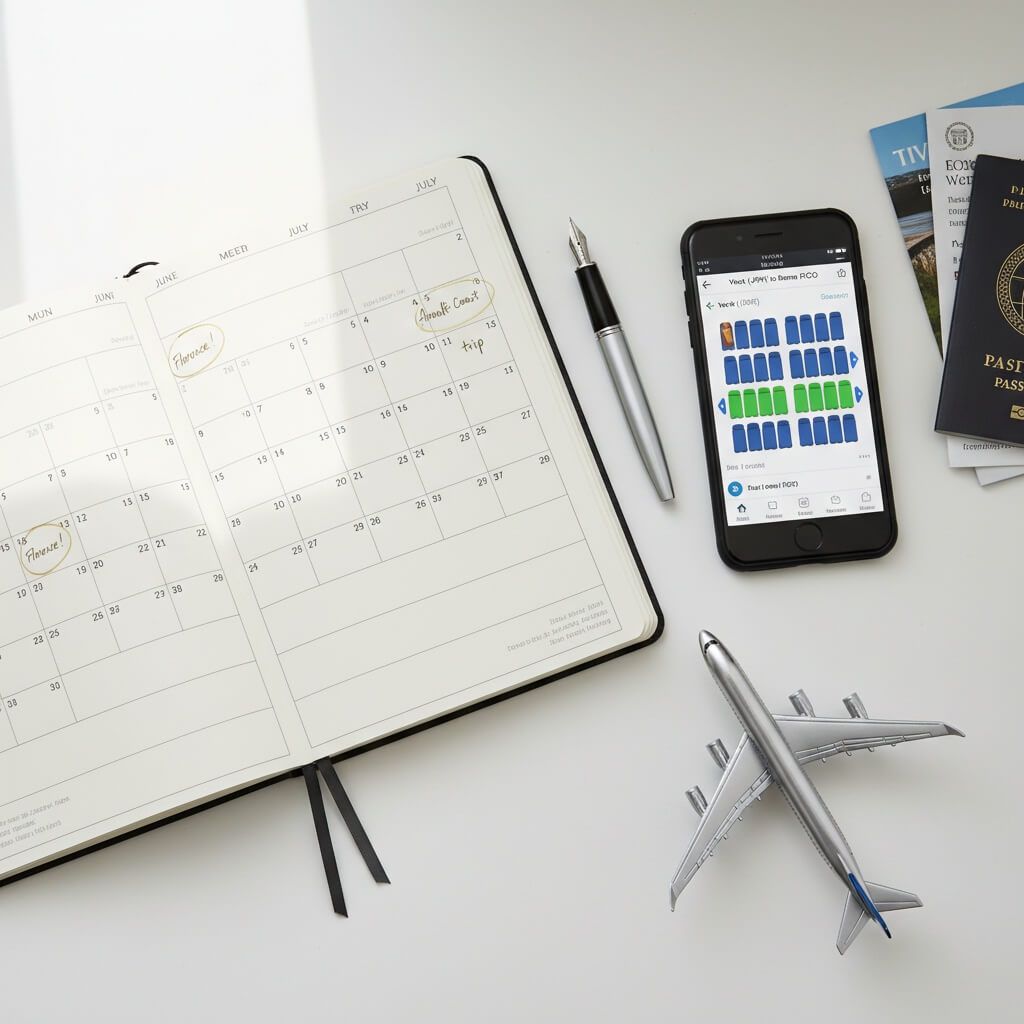
January is my primary low-season anchor for transatlantic and transpacific business class cash fares. February runs a close second. Flying in January or February consistently produces the best cash fares on these routes, and that pattern holds in award travel too.
AranGrant's aggregated 2024–2025 data confirms this: January and July tend to show the lowest average business class prices. Bookings made during calmer planning periods average roughly 5–8% lower than those made during busy months like September or year-end.
The high-demand periods to avoid, or price carefully:
June, September, and December — Consistently peak business class travel months across 2024 and 2025.
December specifically — The most expensive flight period year after year. Christmas and New Year travel inflates business class pricing across virtually every route.
Midweek departures — Monday through Wednesday average lower fares than Friday, Saturday, and Sunday flights.
They do. But only if you're genuinely flexible.
I once booked a last-minute business class seat to London for $780, 72 hours before departure, on a route that had been pricing at $3,200 for weeks. Here's why that happened: when a business class cabin is running at 60–70% capacity within two weeks of departure, airlines face a choice between flying those seats empty or discounting them to attract price-sensitive leisure travelers. They discount. The last-minute window can see 50% or steeper price cuts in half-empty cabins.
That said, airlines simultaneously protect seats for high-paying last-minute corporate travelers. The dynamic is genuinely unpredictable, which is why flexibility isn't optional for this strategy. Tools that surface last-minute deals include Secret Flying, the Google Flights Explore map view, and upgrade bidding platforms if you've already booked economy.
I always price out both a round-trip and two separate one-way tickets before booking any business class itinerary. The difference can be several hundred dollars.
On most international legacy carrier routes, round-trip business class is significantly cheaper than two one-way tickets. However, the picture changes in specific situations: budget airlines frequently price one-way business tickets at roughly half the round-trip cost, and award travel often treats one-way and round-trip redemptions similarly in total miles.
Run the same itinerary as a round-trip, then price two separate one-way tickets on Business Tickets or Google Flights. It takes four minutes and can save $400.
One of the biggest realizations in my travel career was discovering that where you depart from matters almost as much as when.
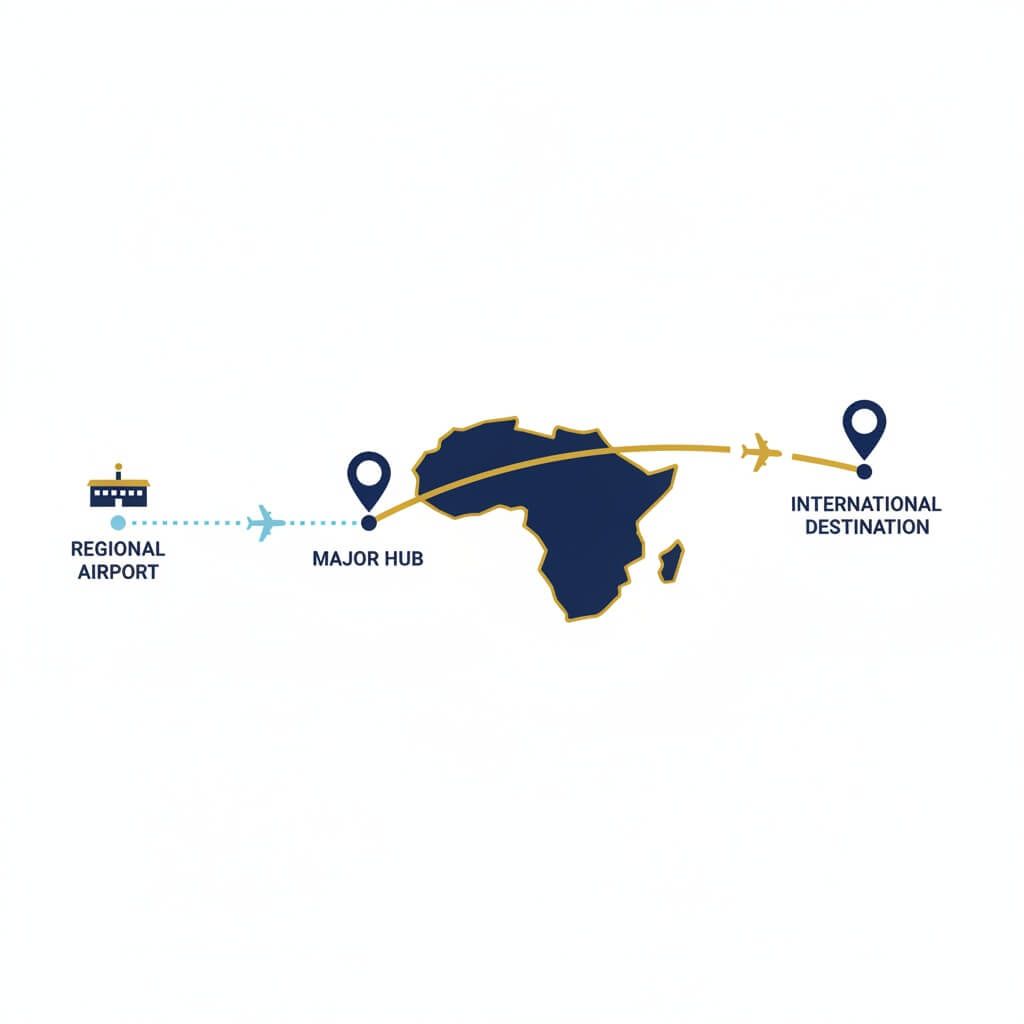
A positioning flight is a short, typically economy class segment you take to reach a better-priced departure airport for your main business class flight.
Here's a specific example: a positioning flight from Nashville (BNA) to New York JFK at $89 enables a JFK–London Heathrow business class booking at $1,400. Total cost: $1,489. The alternative, a nonstop business class from Nashville, prices at $1,900 or more. Net saving: over $400, plus you're departing from one of the world's best-connected hubs.
The same logic applies to award travel. A Las Vegas (LAS) to Los Angeles (LAX) positioning flight at $37 saves 34,000 AAdvantage miles on a LAX–Sydney business class award. That $37 economy ticket generates nearly $500 in award value.
If you're flying from a secondary market, always check whether a cheap economy connection to the nearest major hub unlocks a significantly better business class fare.
An open-jaw itinerary is simply a flight where you arrive in one city and depart from a different one. Instead of flying New York to Paris and back, you might fly New York to Paris in business class, travel by train to Amsterdam, then return Amsterdam to New York.
Why does this matter for pricing? Some airlines price open-jaw itineraries more favorably than straight round-trips on specific routes, and it allows you to mix cabin classes strategically. For example:
Outbound: JFK to CDG (Paris) in Business Class
Surface: Paris to Amsterdam by train (approximately €35, 3.5 hours)
Return: AMS to JFK, comparing business class vs. economy pricing
The AMS–JFK return might price lower than CDG–JFK on certain carriers, particularly if Amsterdam is a less-contested origin point. Use Google Flights' multi-city search or Business Tickets multi-city tool to build and price these itineraries quickly. Always compare the open-jaw total against a straight round-trip before committing.
Sometimes the cheapest way to fly business class isn't to book it directly. It's to book economy and upgrade strategically.
I've had upgrade bids accepted on Air Canada and Singapore Airlines that moved me into lie-flat business class for $200–$400 above my economy fare. I've also had bids rejected and flown economy. Upgrade strategies are a complement to the primary booking strategies covered earlier, not a replacement.
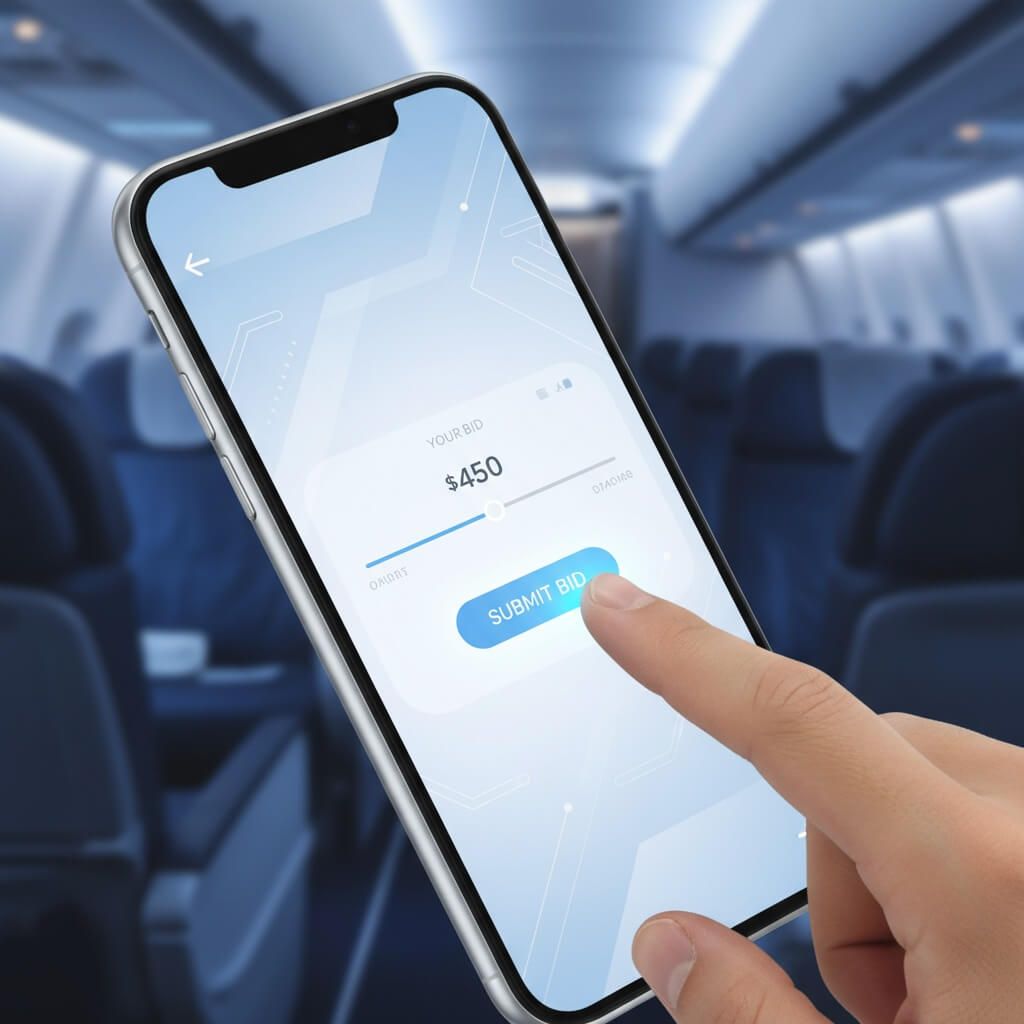
Upgrade bidding is powered primarily by Plusgrade, a platform used by over 80 airlines worldwide including Air Canada and Singapore Airlines. If you've ever received an email after booking asking if you'd like to bid for an upgrade, you've encountered a Plusgrade-powered system.
Here's how the process works:
Book your economy ticket — Bidding is only available after you hold a confirmed reservation.
Receive the bid invitation — Usually via email 1–4 weeks before departure, with a link to the bidding portal.
Submit your bid — Choose between the airline-set minimum floor and maximum ceiling. You enter payment details but are not charged unless your bid is accepted.
Modify or cancel if needed — Most programs allow changes up to 72 hours before departure; some close bidding as early as 7 hours out. Check your specific airline's rules before submitting.
Wait for the decision — Bids are reviewed by airline revenue management teams typically between 5 days and 6 hours before departure, once unsold premium seats are confirmed.
Receive confirmation — If accepted, your payment is processed and you receive business class benefits including airport lounge access and extra baggage allowance.
My personal bidding strategy: I bid in the lower-mid range of the available window. Going too low rarely works because airlines use Plusgrade's machine learning recommendations to set minimum floors based on historical demand data. Going too high simply overpays for what you could have booked directly.
One non-negotiable rule: always be genuinely happy with your booked cabin before submitting any bid. If you need business class for a specific trip, book it directly. Don't rely on a bid.
Complimentary upgrades via elite status are real but increasingly rare on popular routes. American Airlines AAdvantage Executive Platinum and Platinum Pro members receive systemwide upgrades applicable to next class worldwide. United Airlines MileagePlus Premier members receive complimentary space-available upgrades on select United and United Express flights.
The reality: on high-demand transatlantic and transpacific routes, business class cabins are frequently full with revenue passengers. Elite status upgrades work best on domestic routes and less-traveled international segments.
For travelers who haven't yet reached elite status, co-branded travel rewards credit cards offer a more accessible near-term path. Several airline co-branded cards issue upgrade certificates annually, subject to availability. These certificates connect directly back to the credit card strategy covered earlier, reinforcing that the best business class travelers build an interconnected system rather than relying on any single tactic.
The same business class flight can vary meaningfully in price, flexibility, and consumer protection depending on where you book it. Using a flight search engine like Business Tickets as a baseline research tool before committing to any channel is the discipline that ties this together.
My personal rule: I book direct for any trip where flexibility or mileage accrual matters, which is most of them. Direct booking delivers several advantages that third-party platforms can't match: full mileage accrual, direct access to the airline's customer service for changes and cancellations, and access to award tickets through loyalty program portals. Airlines also occasionally offer web-only promotional fares not published to aggregators.
The workflow I use: search on Google Flights or Business Tickets to identify the best fare and routing, then go directly to the airline's website to book. This captures the research efficiency of aggregators without sacrificing the protection and flexibility of direct booking.
Flight consolidators are one of the most powerful and least understood tools available for discounted business class cash fares. I've saved over $2,000 on a single international booking through a consolidator fare that didn't appear anywhere on public search engines.
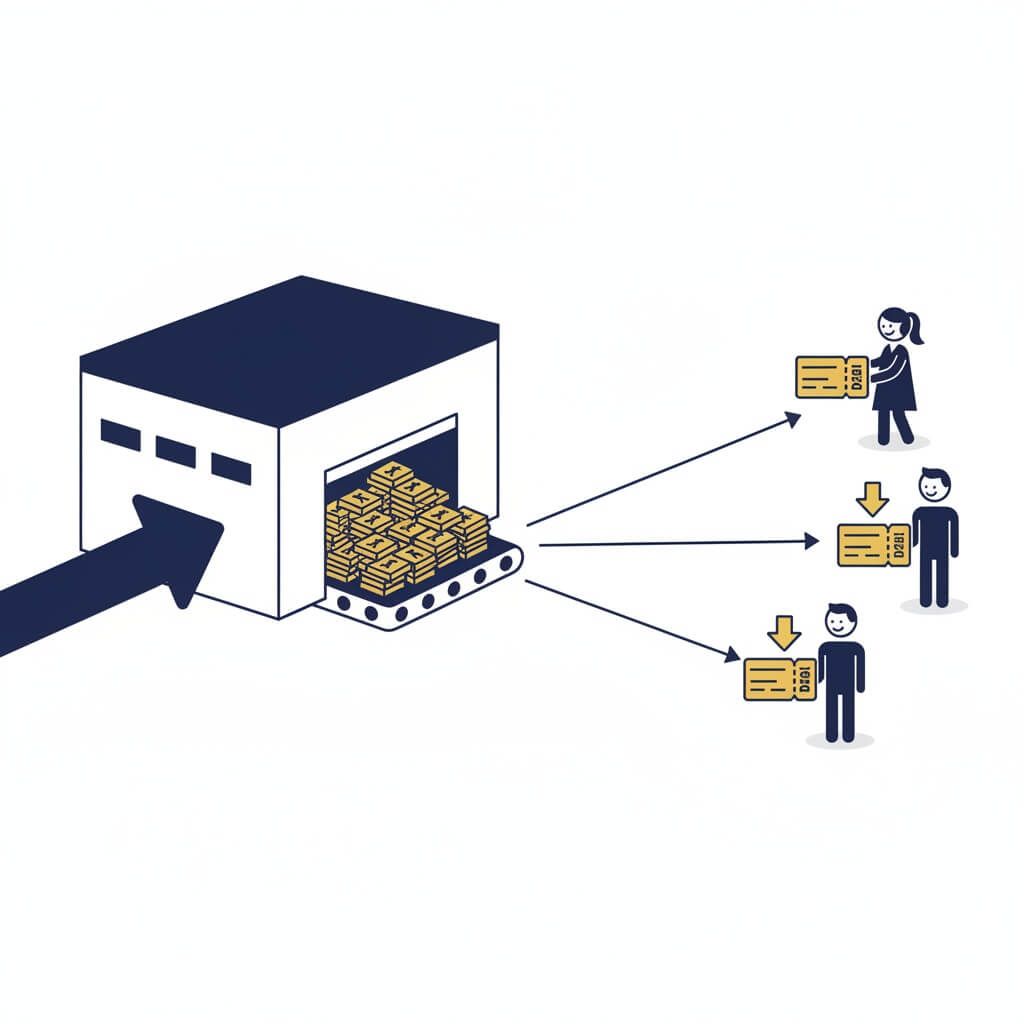
Consolidators are third-party companies that purchase airline inventory in bulk at discounted net rates, then resell those tickets at prices below published retail fares. The discounts are real, typically 30–40% below regular fares on long-haul routes.
Factor | Direct Airline Booking | Consolidator Booking |
|---|---|---|
Price | Full retail or sale fare | 30–60% below retail |
Mileage accrual | Full miles credited | Often no miles accrual |
Changes/cancellations | Airline policy applies | Restricted or unavailable |
Customer service | Direct airline access | Third-party intermediary |
Best for | Flexible trips, award travel | Fixed itineraries, long-haul |
Consolidators work best for long-haul international business class on fixed itineraries where you don't need flexibility and aren't prioritizing miles accrual. Platforms like Business Tickets operate in this space.
Legitimacy verification is non-negotiable. Some consolidator services are scams. Legitimate consolidators hold membership in organizations like IATA (International Air Transport Association) and ASTA (American Society of Travel Agents). Verify membership before booking. If a consolidator can't confirm affiliation, walk away.
Credit card payment provides federal consumer protections that cash and debit cards don't offer. Under the Fair Credit Billing Act (FCBA), you have the right to dispute inaccurate or unfair charges and request a chargeback from your card issuer. If an airline ceases operations before your flight, payment by credit card is often the only practical recovery mechanism.
Premium travel rewards credit cards add another layer: built-in trip cancellation insurance, trip delay coverage, and purchase protection. The same card that earns you points toward your next business class award also protects the discounted cash booking you made through a consolidator.
Airline | Product Name | Best US Hubs | Loyalty Program | Notable Strength |
|---|---|---|---|---|
Delta Air Lines | Delta One | Atlanta, New York (JFK), Los Angeles | SkyMiles | Consistent soft product, strong domestic network |
United Airlines | United Polaris | Houston, Chicago, Newark, San Francisco | MileagePlus | Lie-flat on most long-haul, strong Star Alliance access |
American Airlines | Flagship Business | Dallas, Miami, New York (JFK), Los Angeles | AAdvantage | Qatar Airways QSuites accessible via AAdvantage miles |
JetBlue Airways | Mint | New York (JFK), Boston, Los Angeles | TrueBlue | Outstanding value on transatlantic routes, private suites |
Alaska Airlines | Transcontinental First | Seattle, Los Angeles, San Francisco | Mileage Plan | Strong partner network, unique Cathay Pacific access |
For award redemptions, non-US carriers deserve serious attention. ANA is accessible via Virgin Atlantic Flying Club miles for transpacific business class. Singapore Airlines is bookable via Chase or Amex transfer partners through Singapore KrisFlyer. Lufthansa's Senator Lounge is among the best airport lounge experiences globally, bookable via Aeroplan or United MileagePlus from US hubs.
Check award availability before looking at any cash fare. Points and miles consistently deliver the highest percentage savings on premium cabins. Award availability search is always step one.
Run fare alerts on at least three platforms simultaneously. Google Flights, Business Tickets, and Airfarewatchdog Premium run continuously on my target routes. The redundancy catches deals that single-platform monitoring misses.
January and February are your best months for transatlantic and transpacific travel. These months consistently produce the best cash fares and the most award availability. Plan your premium travel calendar around this pattern whenever possible.
Price both a round-trip and two separate one-way tickets before every booking. On legacy carrier international routes, round-trips are almost always cheaper. Check every time regardless.
Keep Chase Ultimate Rewards and Amex Membership Rewards as your primary point currencies. Maintaining transferable points until you have a specific booking in mind preserves maximum flexibility. Never transfer miles speculatively.
Search 11 months in advance for award seats on popular routes. Business class award availability on routes like New York–London or Los Angeles–Tokyo disappears fast.
Run the positioning flight comparison on every international booking. A $50–$100 economy positioning flight to a major hub can unlock business class fares $400–$1,000 cheaper than departing from your home airport.
Pursue only saver-level award redemptions. Standard or anytime awards at 2–3 times the miles for the identical seat are never worth it. If saver availability isn't there, wait, search different dates, or use a different program.
Always pay with a premium travel rewards credit card. The combination of points earning, built-in travel insurance, and chargeback protection is non-negotiable, especially when booking through consolidators or deal platforms.
Act immediately on error fares. Book directly with the airline for the 24-hour cancellation window and avoid non-refundable downstream bookings until the ticket is confirmed.
Use Virgin Atlantic Flying Club for Delta One access. Delta's own program charges significantly more miles for the same seat. Partner program pricing creates some of the best business class redemption values available.
Verify consolidator legitimacy before every non-direct booking. IATA and ASTA membership are the minimum credibility thresholds. If a consolidator can't confirm affiliation, don't book.
FAQ
Start by checking award availability through airline loyalty programs, which consistently delivers the highest savings on premium cabins. Then set fare alerts on Google Flights, Business Tickets, and Airfarewatchdog for your target route. Book in January or February for transatlantic and transpacific routes, 4–6 months in advance. Always price both round-trip and one-way options, and consider a positioning flight to a major hub airport.
Blog