


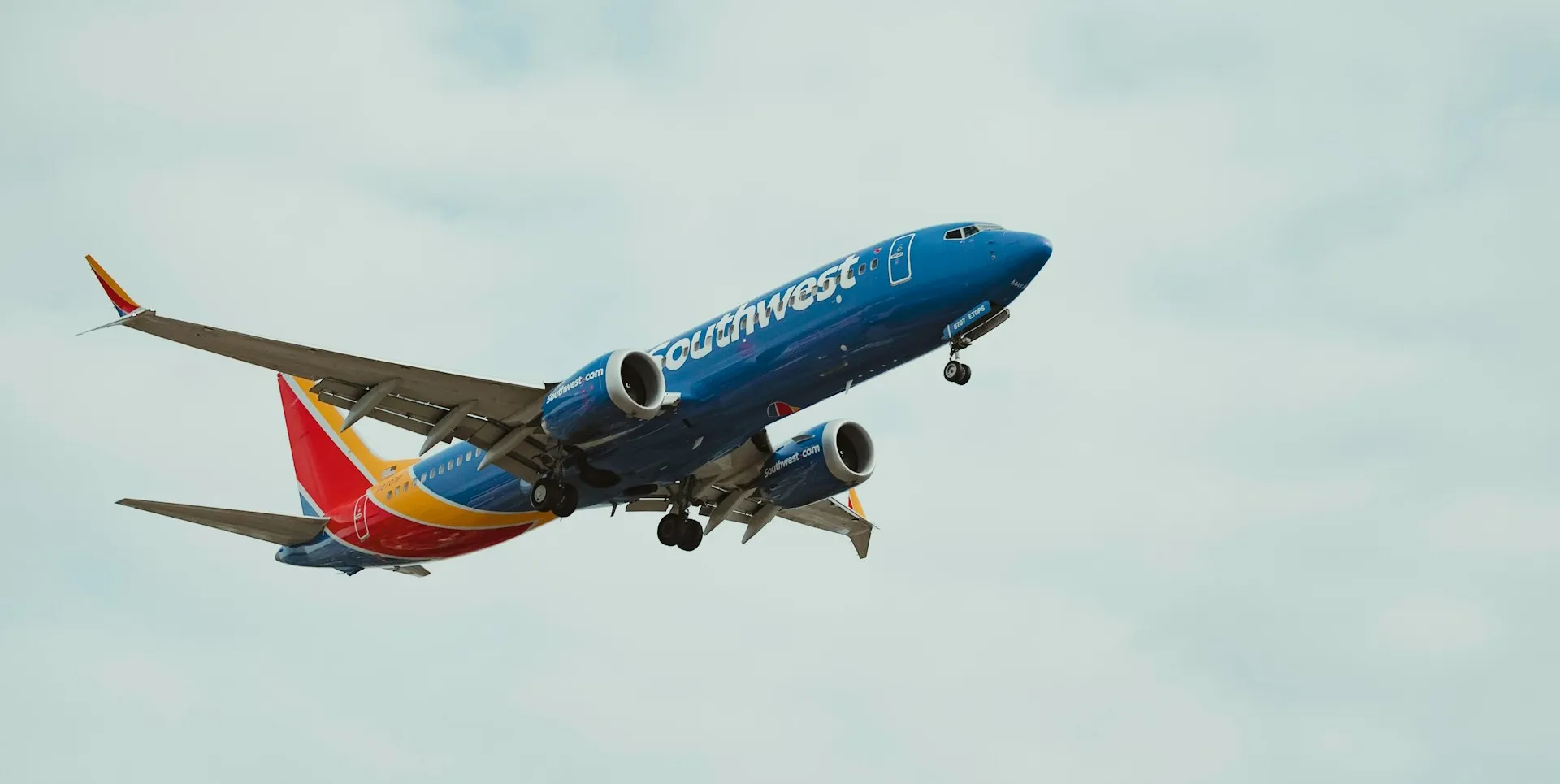

If you've ever searched for a business class ticket on Southwest Airlines and come up empty, you're not alone. The question comes up constantly, and the answer is more layered than a simple yes or no. Southwest doesn't operate a traditional business class cabin with lie-flat seats, premium meal service, or a curtained-off section at the front of the plane. But not all seats are created equal on a Southwest flight, and the fare structure has changed enough in 2024 and 2025 that it's worth understanding what you're actually buying.
The airline offers multiple fare tiers, extra-legroom rows, and a loyalty program that rewards frequent flyers meaningfully. None of that adds up to business class. But knowing the difference between what Southwest sells and what legacy carriers offer in their premium cabins helps you make a smarter booking decision, especially if you're evaluating Southwest against Delta, United, or American for a domestic trip.
This breakdown covers the fare tiers, the seating changes, the loyalty math, and whether any of it is worth paying extra for.
Southwest Airlines has always positioned itself as a point-to-point, low-cost carrier with a single cabin configuration. Every passenger boards the same aircraft, sits in the same type of seat, and gets the same basic level of service. There are no lie-flat beds, no dedicated overhead bin space reserved for premium passengers, no multi-course meals, and no private check-in desks.
This is a deliberate business model choice, not an oversight. Southwest built its reputation on simplicity: one aircraft type (the Boeing 737), no seat assignments until recently, and no fare classes that come with dramatically different onboard experiences. The airline has competed on price and convenience rather than premium amenities.
That model worked for decades. Southwest grew into one of the largest domestic carriers in the United States by keeping costs low, turning aircraft fast, and passing savings to passengers. Adding a premium cabin would have complicated every part of that equation, from cleaning times to catering logistics to boarding sequencing.
So if you're flying Southwest and expecting anything resembling the Polaris cabin on United or the Mint product on JetBlue, you'll need to reset your expectations entirely. Those are fundamentally different products built on different operational philosophies.
While there's no business class cabin, Southwest does sell multiple fare types that come with different perks. As of 2024 and into 2025, the fare structure has been updated, and the old "Business Select" branding has largely been replaced with a revised tier system.
The current fare tiers differ primarily on boarding priority, flexibility, and loyalty point earnings:
Fare Type | Boarding Priority | Refundable | Transferable | Extras |
Wanna Get Away | Low | No | No | Basic |
Wanna Get Away Plus | Medium | No | Yes (to others) | Flexible changes |
Anytime | High | Yes | Yes | Priority boarding |
Choice Extra | Highest | Yes | Yes | Priority boarding + bonus points + premium drink |
Choice Extra sits at the top of Southwest's fare ladder. It replaced the old Business Select fare and includes priority boarding in Group A (positions 1 through 15), bonus Rapid Rewards points at 12x the base fare, a complimentary premium drink, and fully refundable and transferable ticket terms. That's the closest Southwest gets to a premium product.
The catch: none of these fare tiers change the seat you sit in. You still get the same 17-inch-wide seat as the person who paid the lowest fare. The difference is when you board and what you earn in loyalty points, not what you experience once you're seated.
For decades, Southwest was famous for open seating. You checked in, got a boarding position (A, B, or C group), and picked any open seat when you boarded. No assigned seats, no seat maps, no pre-selecting your spot.
That changed in 2025. Southwest moved to assigned seating, which was a significant strategic shift for the airline. Passengers now select seats at booking, similar to how most other U.S. carriers operate. Southwest's official seating page outlines the current process.
Why does this matter for anyone comparing Southwest to a carrier with business class? Because it's part of a broader effort to attract higher-value travelers. Assigned seating, premium row options, and revised fare tiers are all pieces of the same strategy. Southwest is trying to capture more revenue from passengers who previously chose legacy carriers specifically because they wanted predictability and comfort.
What Changed With Assigned Seating: Southwest now offers premium rows near the front of the aircraft with extra legroom. These seats cost more and board first, but they're still standard 737 seats. No cabin divider, no separate service, no upgraded meal. The upgrade is physical space, nothing more.
With the shift to assigned seating, Southwest introduced extra-legroom seating in the first few rows of the aircraft. These seats offer more pitch than the standard rows further back, which is a meaningful comfort improvement on longer flights.
On a typical Southwest 737-800, standard seat pitch runs around 32 inches. The premium rows at the front bump that up noticeably, giving you more space to stretch out. For a domestic flight under three hours, that's a real difference, particularly if you're tall or working on a laptop.
The seat has more legroom. That's the full extent of the premium experience. If you're comparing it to Delta Comfort+ or United Economy Plus, the Southwest premium rows are roughly equivalent in terms of what you physically get, though the boarding and fare flexibility perks differ.
To understand what Southwest is missing, it helps to look at what other U.S. carriers actually offer in their premium cabins on domestic routes. The gap is substantial.
Feature | Southwest Choice Extra | Delta First Class | American Business | United First |
Separate cabin | No | Yes | Yes | Yes |
Wider seat | No | Yes | Yes | Yes |
Meal service | No | Yes | Yes | Yes |
Dedicated FA service | No | Yes | Yes | Yes |
Lounge access | No | With card/status | With card/status | With card/status |
Priority baggage | No | Yes | Yes | Yes |
Lie-flat (domestic) | No | No | No | No |
Price premium | Moderate | Significant | Significant | Significant |
On a domestic Delta flight, first class typically costs significantly more than economy, often two to four times the base fare depending on route and timing (prices vary widely and this range reflects general market patterns rather than a fixed ratio). You get a wider seat, a real meal on longer routes, dedicated service, and priority baggage claim. American and United offer comparable domestic first class products.
Southwest's Choice Extra fare costs more than its base fares, but the price gap is smaller and the onboard experience gap is enormous. You're paying for flexibility and boarding position, not a different physical product.
One area where Southwest's premium fares hold real value is the loyalty program. According to Southwest's Rapid Rewards program terms, Choice Extra tickets earn 12x points on the base fare, compared to 6x for Anytime fares. Wanna Get Away Plus earns at a lower multiplier, and base Wanna Get Away fares earn the least. Point multipliers are subject to change and promotional adjustments, so checking the current earning chart before booking is worth the two minutes it takes.
For frequent Southwest flyers chasing A-List or A-List Preferred status, booking Choice Extra on higher-fare routes can accelerate point accumulation meaningfully. According to Southwest's status tier page, A-List Preferred status requires 70 qualifying flights or 105,000 tier qualifying points per year. That status comes with 100% bonus points on every flight, free same-day standby, and dedicated phone lines with shorter wait times.
Is that a premium cabin experience? No. But it's a legitimate reason to pay up on Southwest if you fly the airline regularly and value its network. The loyalty math works differently than on legacy carriers, and for some travelers, the point accumulation rate on Choice Extra fares outperforms what they'd earn on a legacy carrier's economy ticket.
Southwest's entire network design works against a traditional premium cabin. The airline operates primarily short- to medium-haul domestic routes, with average flight times well under three hours. On a 90-minute flight from Dallas to Houston, there's limited time to deliver a premium meal service or justify the cost of a lie-flat seat. The economics simply don't support it on that type of route.
The quick-turn model adds another layer of complexity. Southwest targets gate turnarounds of 25 minutes or less on many routes. Cleaning a premium cabin, restocking dedicated galley equipment, and managing separate boarding processes for premium passengers would push that number up, which cascades into delays across the network. Fast turns are central to how Southwest keeps costs down and schedules tight.
Fleet composition is the third constraint. Southwest operates exclusively Boeing 737s, configured with a single-aisle layout and three seats on each side of the cabin. There's no wide-body option, no upper deck, and no physical space for a true business class configuration without significantly reducing total seat count. Fewer seats per flight means higher fares across the board, which cuts against the airline's core value proposition.
Put those three factors together and a dedicated premium cabin stops making operational sense. It would cost more to run, slow the airline down, and require a fleet strategy Southwest has never pursued.
Despite not having a business class product, Southwest has made several moves in recent years to appeal to travelers who might otherwise choose a carrier with a premium cabin.
The assigned seating rollout is the biggest signal. It shows Southwest is willing to change a core part of its identity to attract higher-value customers who want predictability when they book. That's a meaningful concession for an airline that built its brand on the boarding group system.
The airline has also expanded its partnership with Chase through the Southwest Rapid Rewards credit card portfolio, which includes the Southwest Rapid Rewards Priority Card. That card offers 7,500 anniversary bonus points, 4 upgraded boardings per year, and a $75 Southwest travel credit annually. For someone who flies Southwest 10 to 15 times a year, the card offsets the cost of better boarding positions without requiring Choice Extra fares on every booking.
Southwest has also been refining its premium row pricing, working to find the price point that captures revenue from travelers willing to pay for legroom. The goal is to attract those passengers without pricing out the core budget-conscious flyers who made Southwest what it is.
Red-eye flights are another addition. Southwest launched overnight routes as part of its 2024 and 2025 expansion, targeting business travelers who want to maximize their working day. None of that involves a premium cabin, but it does reflect a deliberate effort to compete for a different type of customer than Southwest traditionally served.
Business travelers evaluating Southwest against carriers with actual premium cabins are really comparing two different things. Southwest competes on a different set of variables than Delta First Class or United First.
The onboard experience gap is real and it's wide. No premium seat, no meal, no dedicated service, and no lounge access anywhere in the network. If you hold status on Delta, United, or American, that status opens lounges, upgrades, and priority handling that Southwest simply can't match. Southwest's status system is largely self-contained and doesn't translate to airport amenities the way legacy carrier status does.
International flying is another gap. Southwest's international network is limited primarily to leisure destinations in Mexico, the Caribbean, and Central America. There's no long-haul premium product, no lie-flat seat to a European hub, and no partnership with a major international alliance. If your travel includes transatlantic or transpacific routes, Southwest won't cover that part of your itinerary.
For a two-hour domestic hop where you need to get somewhere and you're checking a bag, Southwest often makes more financial sense than paying $400 more for a domestic first class seat that gives you a slightly wider seat and a warm cookie. For a transcontinental flight or anything requiring real comfort over several hours, legacy carriers with proper premium cabins pull ahead on the experience side.
Southwest announced in 2024 that it would make substantial changes to its business model, including the move to assigned seating, the introduction of red-eye flights, and a broader push to improve revenue per seat. The airline was under pressure from activist investor Elliott Investment Management, and the leadership team committed to a more aggressive revenue strategy. Coverage of that campaign documented the scope of changes Southwest agreed to implement.
Will that strategy eventually include a true premium cabin product? Southwest has not announced any plans to introduce a business class section, and doing so would require significant changes to its fleet strategy and operational model. Neither of those changes appears to be on the near-term roadmap.
The more likely path is continued refinement of what already exists: better premium row pricing, more differentiated fare tiers, and possibly expanded lounge access arrangements through credit card partnerships. That still leaves a wide gap between what Southwest offers and what Delta, United, or American provide in their premium cabins. It's movement toward capturing more premium spend, but through incremental improvements rather than a structural overhaul.
For now, boarding a Southwest flight means accepting a single-cabin experience with some flexibility and loyalty perks layered on top. If you know that going in, Southwest delivers consistently on what it promises. If you're expecting a premium cabin, you're on the wrong airline.
FAQ
No. Southwest operates a single-cabin configuration with no first class or business class section. All passengers sit in the same seat type. The Choice Extra fare provides priority boarding and bonus loyalty points, but the seat is identical to every other seat on the plane. Southwest's seating page confirms the single-cabin setup.
Blog